Many times, careers are more a matter of chance and inspiration than destiny.
As such, a variety of U.S. Army Yuma Proving Ground (YPG) outreach programs encourage local youngsters to pursue careers in science, technology, engineering, and mathematics (STEM) in hopes of them one day becoming members of the Army workforce.
"These programs promote the importance of engineering and STEM in the local community," said Col. Randy Murray, YPG commander. "STEM is important to our nation to keep us competitive. It is particularly important to the long term needs of our proving ground in keeping our mission moving forward."
YPG tests virtually everything in the ground combat arsenal, a mission that requires many highly-trained engineers and math-savvy support personnel to ensure a Soldier's equipment works exactly as it is supposed to. As the advanced equipment Soldiers depend on continues to evolve, inspiring students within the local community to pursue STEM careers is crucially important to the future of YPG and its highly technical test mission. YPG's aggressive outreach efforts in this area have become a model for the Army Test and Evaluation Command as a whole, with the proving ground committed to facilitating visits to at least two elementary schools and one middle school per month during the school year, as well as six high schools per semester. In the past year, YPG engineers spoke to nearly 2,500 local students in their classrooms.
"We consider candidates from anywhere, but it's great to be able to hire Yuma-area people into the workforce because chances are they already know it is a great place to live," said Julio Dominguez, YPG technical director. "You don't have to go to the expense of bringing someone in and training them only to have them depart a year or two later."
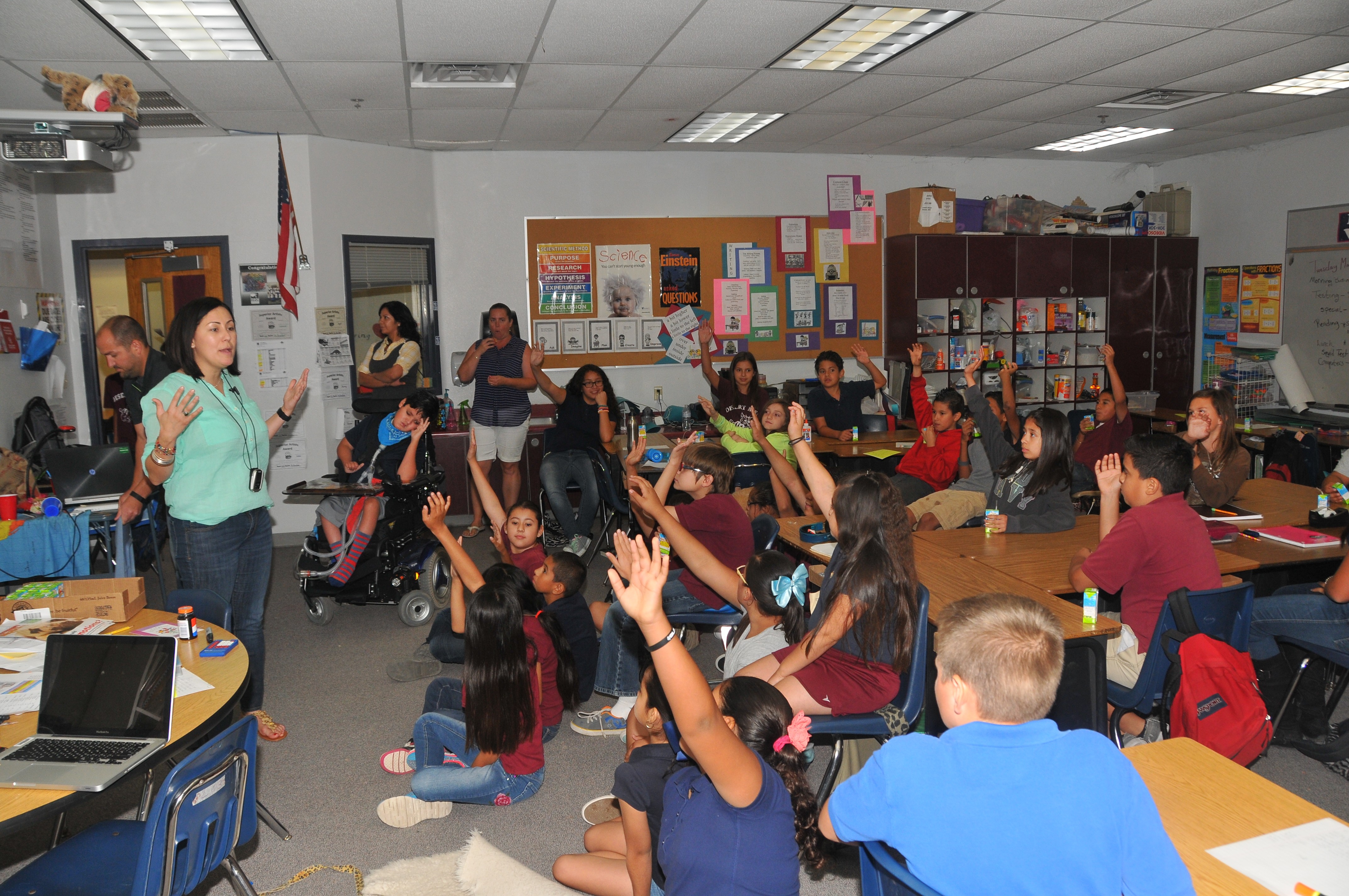
Classroom visits from YPG engineers most often occur on Fridays, though sometimes there are visits during the workweek, and typically last one hour. Visits with younger students involve a presentation on engineering capped by a miniature engineering challenge, such as making a paper airplane capable of flying the entire length of the classroom or constructing the tallest tower possible out of strips of paper.
"We try to give them practical, real world examples they can relate to," said Omar Silva, test engineer. "We talk about Play Station and X-Box instead of more conceptual, theoretical engineering."
Older students, meanwhile, get more specific discussions about engineering and guidance on how to pursue the occupation.
"The end goal when we leave is to ensure they know what an engineer is and that anyone can become one, regardless of background or gender," said Iris Espinoza, training coordinator.
"Part of the message is that you don't have to be a genius, an Albert Einstein, to become an
engineer; what you certainly need to do is to work hard," said Dominguez. "We try to convince young students that it doesn't matter if you don't come from an affluent home or didn't do real well in math last year, as long as you start working hard now to do well in the future."
The YPG outreach effort is likely to take particular interest in students in late elementary and early middle school grades. This effort began in earnest near the end of the past school year, when Espinoza and a team of five engineers spent several hours visiting every fourth and fifth grade classroom at Yuma's Desert Mesa Elementary School.
"The kids were relating to them," said Evelyn Figueroa, fourth grade teacher. "It's amazing because the kids get to see and feel what real careers are like."
The visit to Desert Mesa came on the heels of a Yuma Proving Ground STEM Day where more than 150 students ranging in age from grade school to college visited numerous sites at the proving ground, seeing STEM careers in action and participating in panel discussions with YPG personnel. Event organizers were careful to include folks from a wide range of STEM positions.
"It's important to teach the kids that there is more to STEM than just engineering," said Murray. "We wanted to let them know we have environmentalists, folks who do resource management, and IT work. It was also important to point out women in STEM and highlight the females we have in those fields at YPG."
For their part, YPG engineers who participate in school outreach say that they, too, benefit from the experience mentoring youngsters who could well be future co-workers.
"I like working and talking with kids and seeing the creative ways they work together," said Mike Dickerson, test officer. "We're used to being adult professionals, but when you walk to a third or fourth grader, you're taken back into their perspective of what math and science are to them. Its neat hearing that and trying to communicate my perspective to them."
YPG's engineering mentors are eager to return to local classrooms in the coming school year, but their volunteer efforts inspiring the next generation of engineers are year-round, with sessions delivered to other youth organizations such as the Girl Scouts. Additionally, the proving ground will likely offer several summer hire positions to local college-age engineering students, giving them an opportunity to gain real world experience while contributing to YPG's crucial mission.
Related Links:
The U.S. Army Test and Evaluation Command
Social Sharing