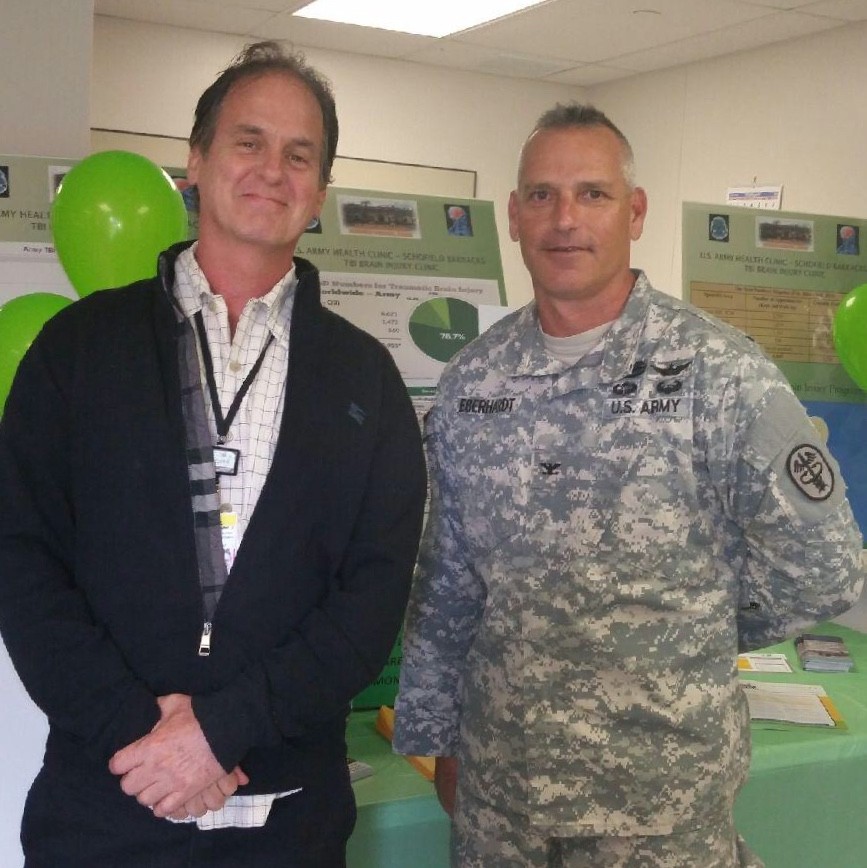

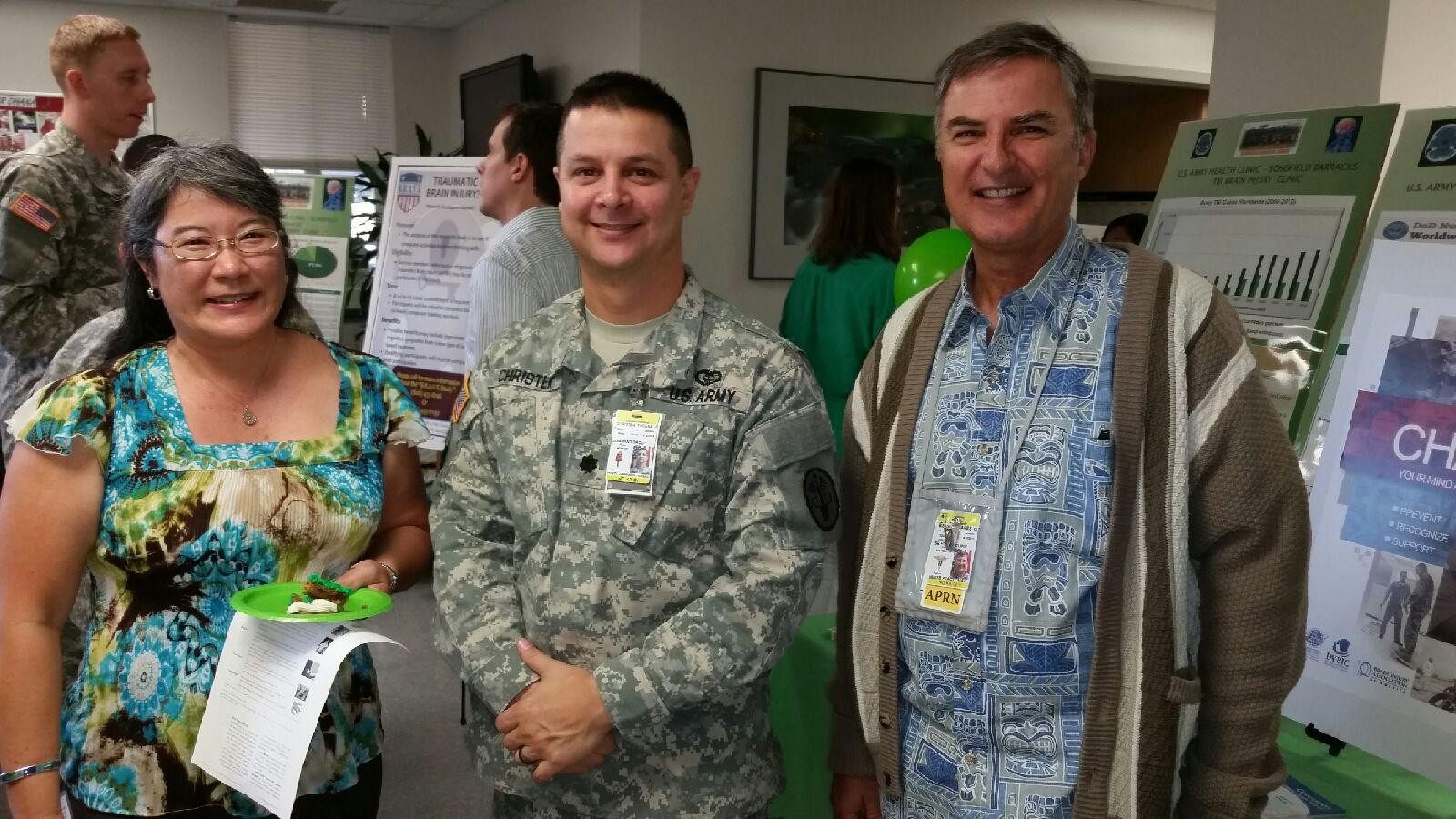
In support of the Army's ongoing efforts to inform Soldiers and their beneficiaries of the importance of early identification and treatment of Traumatic Brain Injury (TBI), the U.S. Army Health Clinic - Schofield Barracks' Brain Injury Clinic (USAHC-SB BIC) held its annual Open House on March 19, 2015. Clinic Staff at the Open House provided information regarding the frequency of TBI in the Army from data collected by the Defense and Veterans Brain Injury Center (DVBIC) between the years of 2000-2014. More than 320,000 DoD members have been diagnosed with a TBI within that time frame. Of the four classifications of TBI, mild, moderate, severe, or penetrating, more than 82% of the Soldiers diagnosed with a TBI were in the mild category.
Other information provided to attendees included information dispelling a common myth about concussive events in the Army. While TBI in the Army is commonly thought to predominantly occur while deployed to combat, research from DVBIC shows that over 80% of TBIs in the military occur in the garrison environment. In the non-deployed setting, TBIs commonly result from vehicle crashes, falls, sports, and during military training.
TBI treatment often involves multidisciplinary teams to holistically treat patients. Members of the USAHC-SB BIC team answered questions at the Open House which included Primary Care, Neuropsychology, Psychiatry, Clinical Health Psychology, Optometry, Speech-Language Pathology, Nurse Case Management, Psychometry, Physical Therapy, and Occupational Therapy. MAJ Harris Abbasi and Dr. Karen Wang demonstrated Optometry equipment commonly used for treatment and diagnosis of different TBI-related eye conditions. Dr. Justin Matsuura demonstrated recently obtained biofeedback equipment that the Clinic offers as part of patient's treatment for posttraumatic headaches, the most frequent complaint after TBI.
The BIC OIC, Dr. Chad Grills, provided information regarding the clinic's clinical outcome data, which shows that patients report overall reduced symptoms and improved quality of life after treatment in the clinic. Additionally, he provided information regarding the ongoing Congressionally-Directed Medical Research Project titled, "Broad-spectrum Cognitive Remediation Available to Veterans: Effects of a Brain Plasticity-based Program in mild Traumatic Brain Injury (mTBI)" (a.k.a BRAVE project). The BRAVE project is open to Soldiers who are diagnosed with mild TBI and investigates new computer-based treatment for cognitive problems after mild traumatic brain injury.
Participants expressed their appreciation for the hands-on demonstrations, impromptu Q&A sessions, informational handouts, and educational posters. BIC staff appreciated the great turnout and look forward to increasing awareness of TBIs throughout the year.
"For more information, visit the PRMC Facebook page at http://www.facebook.com/PacificRMC."
Resources:
Defense and Veterans Brain Injury Center information on worldwide TBI numbers: http://dvbic.dcoe.mil/dod-worldwide-numbers-tbi
Multidisciplinary teams (DVBIC): http://dvbic.dcoe.mil/brain-injury-rehabilitation/article/strategies-symptom-management
Social Sharing