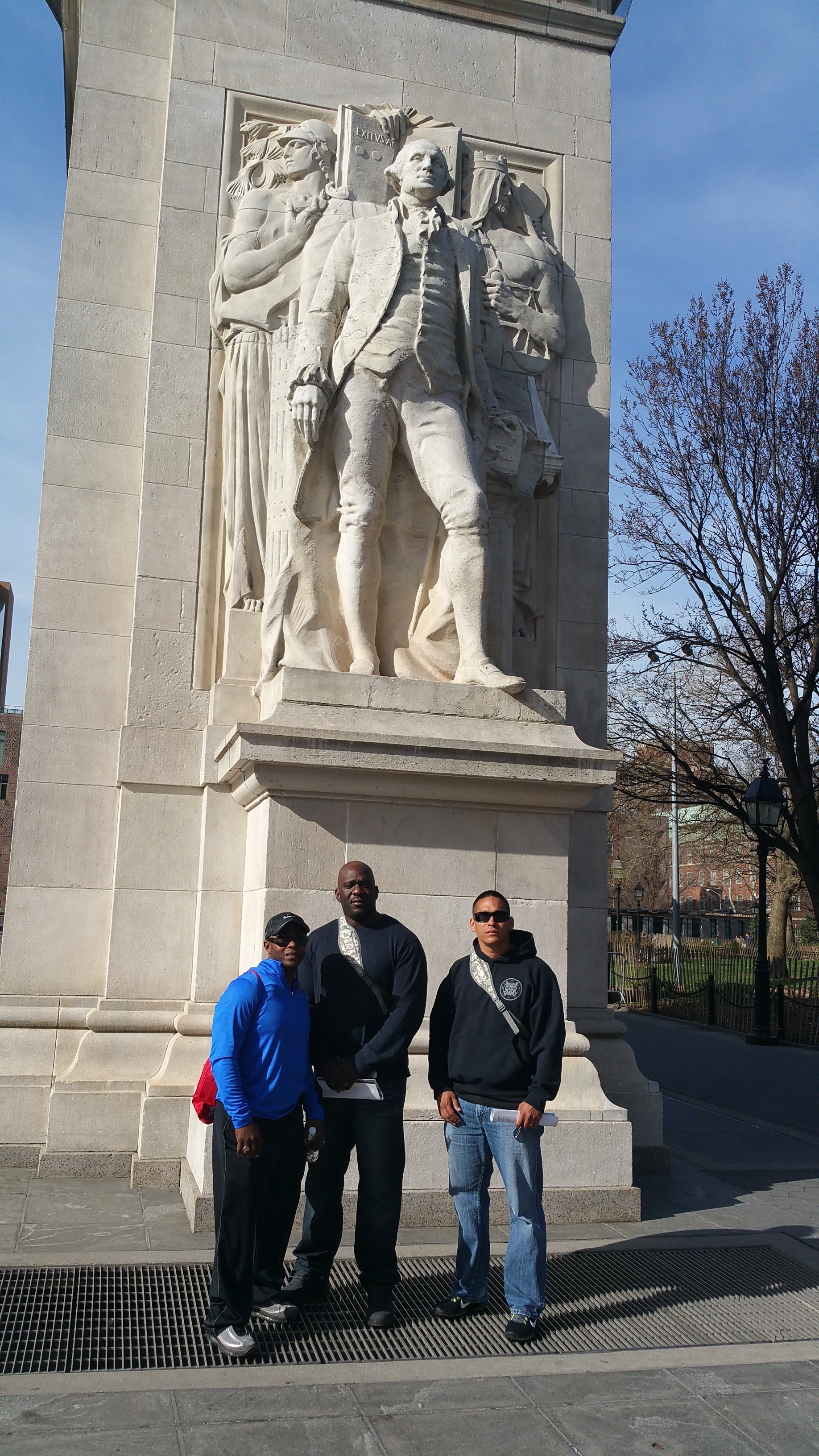
On April 16, 2015, 2-315th Field Artillery Battalion, 72nd Field Artillery Brigade conducted urban land navigation in New York City by searching for points around the city in teams of two. This training served as the next step of the battalion's progression of Ready Individuals Prepared for Duty (RIP4D) line of effort. While April 16 was the actual day of execution, the training started much earlier.
In January, Lt. Col. Kevin Johnston, Commander of the 2-315 FA, assigned an officers and two non-commissioned officers to start planning an urban land navigation course in one of the most densely-populated urban areas in the world: New York City. The planning involved coordinating with the USO in New York, finding points with a military significance, getting tickets to the 9/11 Memorial and Museum, mitigating safety concerns, coordinating travel, and scheduling dinner. Planning also included creating a leader development program that discussed George Washington's defense of Long Island from the invading British army in 1776.
All Soldiers in 2-315 FA learned about the battle and the tactical strengths and weaknesses of each side's plan. This helped the Soldiers not only learn about New York but also to improve their tactical and leader development. Later, on April 14, the battalion was given another Leader Professional Development training (LPD) on urban land navigation and New York City.
During this brief, the Cpt. James Alsfelder briefed 2-315 FA on the military significance of each point. Points such as Grand Central Station, the Recruiting Center in Times Square, Federal Hall, the 107th Infantry Memorial, and Battery Park all had a history that involved the military. In this manner, each person learned about New York while also learning about historical military events. Sgt. 1st Class Daniel Erazo, a team NCOIC in the 2-315 FA BN, believed that this brief served to display the importance of each site and made the land navigation course much better.
At 0500 on 16 April, the Battalion held formation on JBMDL and traveled to Hamilton Train Station where they boarded a train for New York. All 25 participants rode the train, and at 0730, when the train arrived at Pennsylvania Station in New York, the land navigation began. Teams of two had until 1500 to find all five of their points, take a picture at each site, and make it to One World Trade Center where the OIC and NCOICs would be waiting to validate their points. Each team walked an average of 8-10 miles.
"It was exciting to learn how much military history there was in New York City while dealing with the physical demands of a land navigation course," said Sgt. 1st Class Kevin McKeithan, a team NCOIC in 2-315 FA.
After each team completed the course, the whole Battalion was able to secure admission into the 9/11 Memorial and Museum. The next hour and a half served as an emotional reminder to all the NCOs and Officers in 2-315 FA of why they have deployed and fought the past 14 years in support of Operations Enduring Freedom and Iraqi Freedom.
After viewing the museum, the Battalion walked another mile to Fraunces Tavern, one of the most historic restaurants in the country. At this same spot over 200 years ago, General George Washington held a dinner party to bid farewell to his officers the night he resigned his commission after defeating the British military. It was also this same tavern that the Sons of Liberty used as their headquarters, and where Aaron Burr and Alexander Hamilton attended a party together one week before their historic duel. 2-315 Field Artillery enjoyed dinner here while soaking up the history of the tavern. Later that evening, the Battalion rode the subway to Pennsylvania Station where they caught another train back home.
This training served to further the battalion's RIP4D progression by increasing mental toughness, physical toughness, and resilience by combining a stressful dismounted urban land navigation course with physical training. Soldiers had to run/walk 8-10 miles while navigating using a map and dealing with the stress and crowds of a big city.
"The NCOs and Officers of 2-315 FA not only challenged themselves in the complex terrain of a city but learned that training can be conducted in many forms, physical, mental and intellectual," said Col. John Lange, brigade commander of the 72nd FA BDE highlighted the efforts in a meeting the next day, saying that I am proud of the entire Steel Team for planning, preparing and executing this unique training opportunity."
Social Sharing