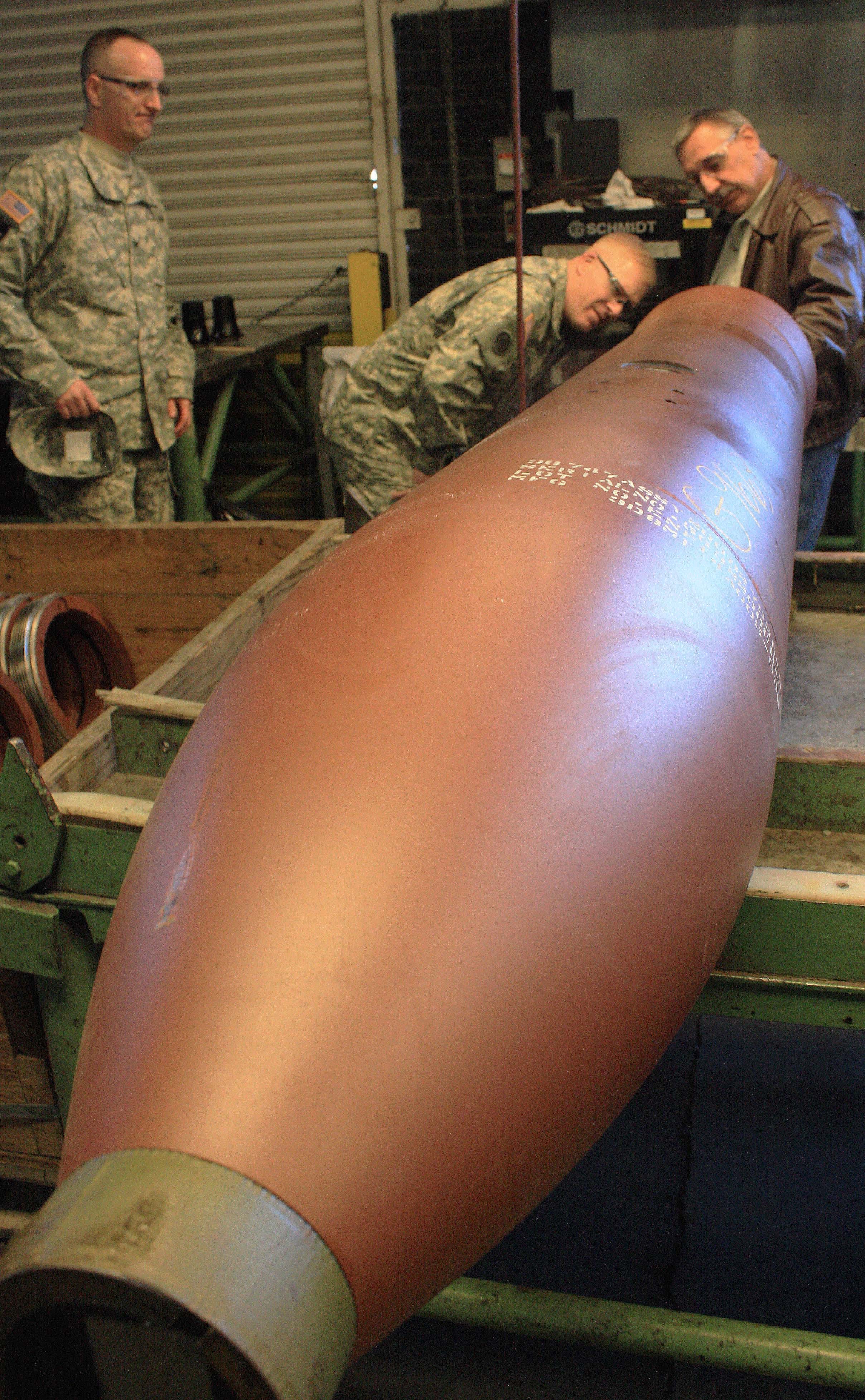

McALESTER, Okla. -- The senior leader charged with overseeing safety and recommending policy to improve safety across the Army made a visit to McAlester Army Ammunition Plant (MCAAP), here, his first to any organic industrial facility in the Defense Department.
Brig. Gen. Jeffrey A. Farnsworth, director of Army safety and commanding general of the U.S. Army Combat Readiness Center (USACRC) at Fort Rucker, Alabama, made the trip to southeastern Oklahoma Feb. 12 to get a first-hand look at the explosives safety programs in place. Farnsworth assumed the duties of the director of Army safety in August 2014.
The three-and-a-half hour visit began with the MCAAP command briefing, which provided Farnsworth an overview of the plant's capabilities and many safety programs. The briefing also highlighted the plant's Voluntary Protection Program (VPP) Star Work Site certification, held since September 2010.
During the first year VPP was implemented in 2008, the plant had 223 recordable injuries and 32 lost-time incidents, said James Hammonds, MCAAP director of safety. By comparison, he said the plant had only 57 recordable injuries and 8 lost-time accidents in 2014.
"VPP has been very good for us," Hammonds said. "It has changed the way our people look at safety."
Hammonds said employees in the production areas wear different colored hats indicating their level of experience and position within the facility, which is a visible indicator of the safety culture at the Joint Munition Command (JMC).
During the visit, the general walked through the B-Line bomb production area where he saw the load, assembly and pack of a 2,000-pound air-delivered conventional bomb. He also received a windshield tour of the largest outload pad as Todd Stone, director of Depot Operations, described how the plant's long-term storage plan is helping to reduce the explosives storage footprint.
Farnsworth noted the many quality-work environment-enhancements and a multitude of process safety measures in each production line.
Farnsworth met with a large group of safety professionals representing multiple career job series, to solicit feedback about safety challenges and issues they face from working at MCAAP, DAC and JMC. Process safety management, professional development and the quality work environment were among the topics discussed.
"I appreciate the opportunity to get your perspective," the general said at the end of the meeting. "It's important for me as the director of Army Safety and the commanding general of the Army Combat Readiness Center to understand the challenges the Army Materiel Command and other units have, and how changing policy impacts your organizations."
His last stop was at the Defense Ammunition Center (DAC), the Army's explosives safety "think tank," where he received their command briefing.
"I'm impressed with the explosives safety training program and enhancement to Army explosives safety management across the force thanks to U.S. Army Technical Center for Explosives Safety (USATCES) assistance visits," Farnsworth said as he prepared to depart. "It's tremendous! I'm also impressed with the visible safety culture everywhere you look. There are a lot of conscientious and talented folks here."
The general said he wants to come back when he can spend more time with DAC and USATCES, to learn more about the explosives safety think tank, and how that learning can be applied in the USACRC. He pledged his help through policy, training and advocacy in the Army's various resource forums.
"It was an honor to have Brig. Gen. Farnsworth visit us and to have the opportunity to show him our top-notch safety programs and workforce," said Col. Joseph G. Dalessio, MCAAP commander. "Safety is my utmost concern and I'm proud of the work that everyone on the installation has put into creating a strong culture of safety."
McAlester Army Ammunition Plant is the Department of Defense's premier bomb- and warhead-loading facility. It is one of 14 installations of the Joint Munitions Command and one of 23 organic industrial bases under the U.S. Army Materiel Command, which include arsenals, depots and ammunition plants. MCAAP is vital to ammunition stockpile management and delivery to the Joint Warfighter for training and combat operations.
Social Sharing