ANNISTON ARMY DEPOT, Ala. -- Being aware of all hazards associated with your work area and job duties is important for every member of the depot's workforce.
"Our goal is to make sure we are not only compliant and safe, but that each employee is going above and beyond," said Wallace Gallahar, Voluntary Protection Program officer for the depot.
For many of the safety monitors and shop supervisors, going above and beyond means looking at each work area as though seeing it for the first time and determining what changes should be made.
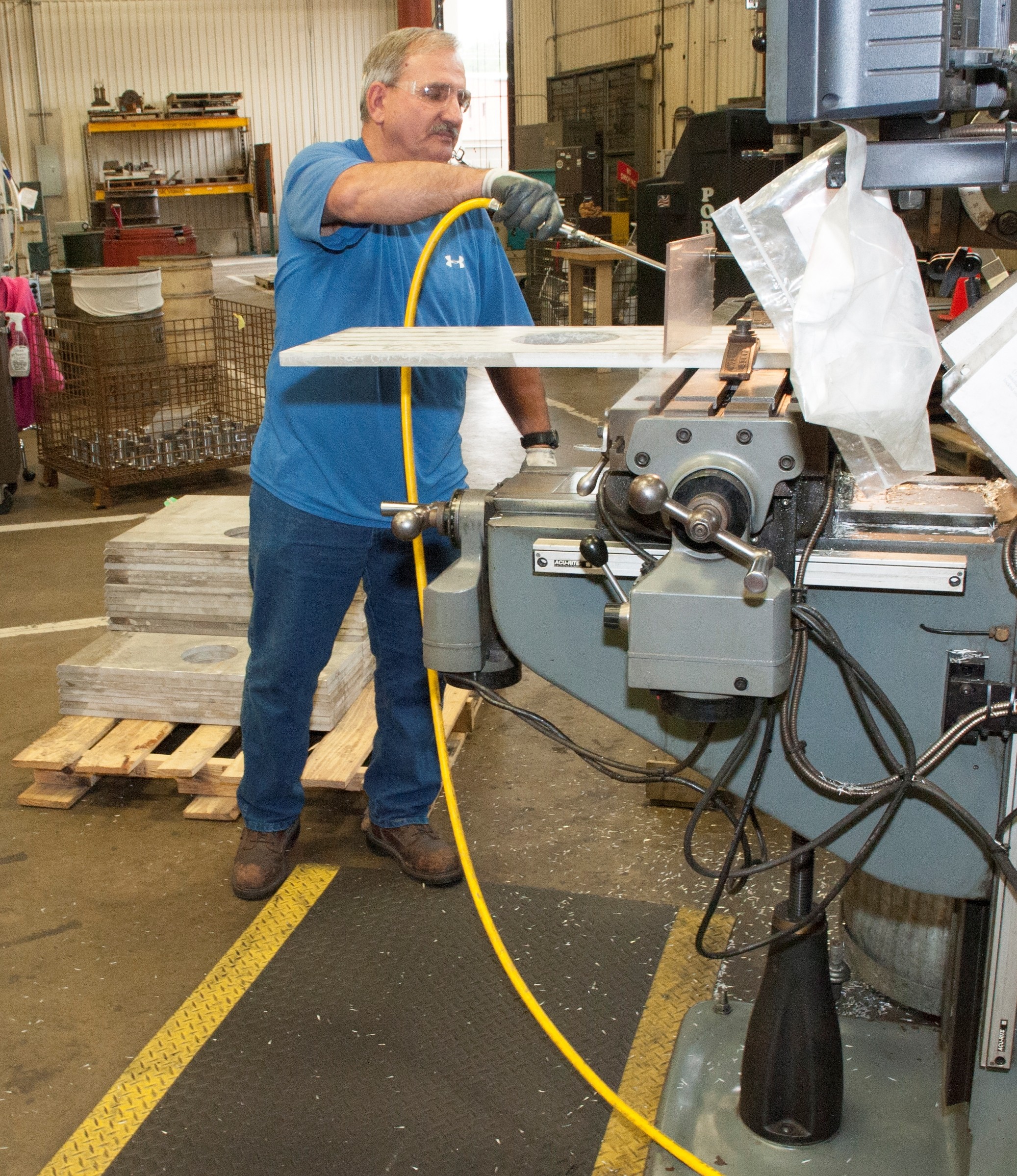
For Colt Turner, the safety monitor in one of the depot's machine shops, it meant re-evaluating air hoses on the machines.
Turner measured for the minimum amount of hose needed to properly clean debris from the machine and asked for the hoses to be shorted appropriately, reducing trip hazards in each work area.
"Most of our employees have bought into the safety program. They do whatever needs to be done to ensure their safety and that of their coworkers," said Turner.
He and the other employees clean their work areas on a daily basis and have a list of items to check on a weekly basis.
Since the machine shop receives frequent visitors, Turner's biggest safety issues tend to be in the form of those who don't work there.
"If you don't have steel-toed shoes on, you aren't supposed to be walking through the shops," said Turner.
For Eric Carter, the safety monitor for the Directorate of Public Works' electrical shop, being safe is a personal choice he makes every day.
"Being safe is important because I want to go home every day to my wife and kids," he said. "Until you make that choice personal, many people won't do it."
Since his work area changes from day to day, and often from one hour to the next, Carter and his fellow electricians always have to be conscious of their surroundings.
"I have to know what I am doing and look out for others," said Carter.
He has learned the importance of taking safety issues to a supervisor immediately, to ensure they are remedied as quickly as possible.
"You have to be safe for yourself," said Carter.
In the Combat Vehicle Repair Facility, Rebecca Barclay has to watch out not only for the employees in her own cost center, but those passing through as well.
"We watch the forklift traffic passing through our area," she said. "If they are going too fast, we'll tell them to slow down."
For Barclay, good housekeeping is the primary way to ensure safety.
This includes moving tripping hazards out of the way and watching hazardous material inventory.
And she is thankful for the guidance she and her coworkers have received through the depot's Target Zero program - including reminders to always wear seat belts and to keep their work areas clear of any fall hazards.
"Target Zero has made a big impact. It has given us an idea of what we need to look at on a daily basis," said Barclay.
Gallahar would like to see all employees embrace safety as if they were a safety monitor - always watching for ways to improve.
For example, according to Gallahar, all equipment should be inspected daily for safety and best practices should be intertwined with quality in each of the depot's production processes.
"Sometimes, in the name of doing things more efficiently, we take short cuts. Those short cuts can cost the depot more money in the long run if we sacrifice safety for efficiency," said Gallahar.
He would like to see each employee hold themselves, their coworkers and their shops visitors accountable for safety.
"We should get to a point where we don't have to think about safety on a daily basis because it will come naturally," said Gallahar.
Social Sharing