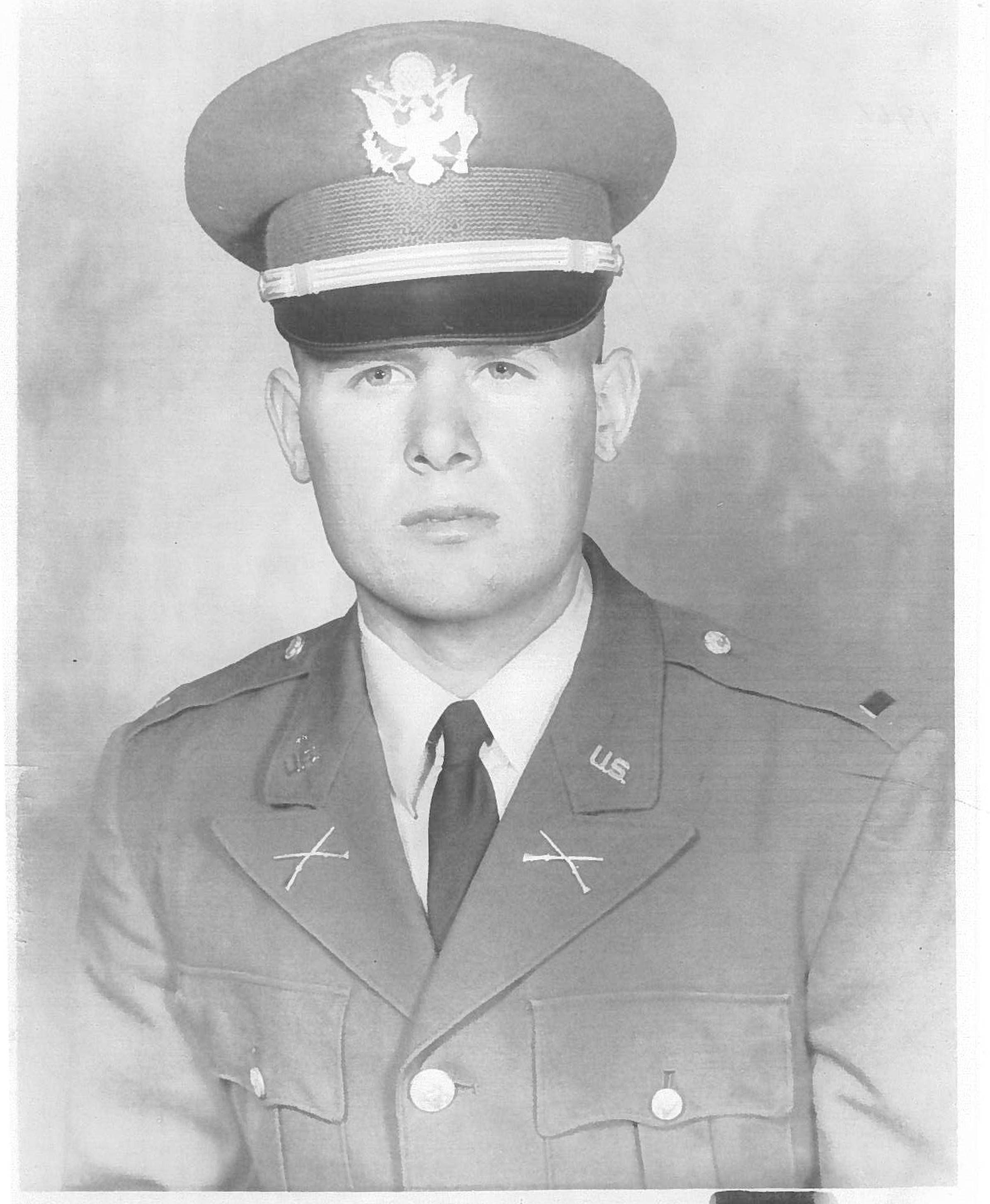
REDSTONE ARSENAL, Ala. -- He has vague memories of the five months he spent in Vietnam: images of laying on his back in a rice patty and shooting at the enemy behind him; using a machete to cut the trunks of palm trees to block the bullets; calling in gunships for protection and airlifting injured friends; the explosion that ended his military career. Behind those lingering memories is a story of valor and gallantry never before told. That silence ends Friday.
Retired 1st Lt. Phillip B. Fikes will be honored in a Silver Star ceremony hosted by Gen. Dennis L. Via, commanding general of the U.S. Army Materiel Command, Oct. 17 at the Bob Jones Auditorium here.
"My wife pushed me for ten years to apply for induction into the Madison County Hall of Heroes, but I avoided it," Fikes said.
Fortunately, in 2013, he followed her advice and discovered in his military record, a Silver Star that had been added to his record, but never officially presented.
The Silver Star Medal is the nation's third highest military decoration for valor that can be awarded to any person serving in any capacity with the United States Armed Forces. The medal is awarded for gallantry in action against an enemy of the United States.
Fikes, a native of Winfield, Alabama, entered the Army in 1967 and arrived in Vietnam in January of 1969. He was assigned to lead First Platoon, Company D, 3rd Battalion, 60th Infantry Regiment -- called the River Raiders. His mission was to secure the area in and around the Mekong Delta.
"I was in an engagement with enemy fire on my first operation just three days after getting in country," Fikes said. "I remember the bullets flying -- they have a very distinct sound."
It would be one month later that he would receive his first of many awards for valor. In February 1969, he and his platoon were inserted into the jungle and encountered a company-sized unit of North Vietnamese fighters. It was there that he and his men rescued fellow Soldiers that were cut off from their platoon. After the battle was over, 50 enemy fighters were dead.
Fikes said he only wanted to make the right choice, because not doing so could cost the lives of members of his platoon.
"I believe my purpose there was to help my fellow Soldiers get home safely," said Fikes. "To do what we were asked to do, and at the same time come home safely to our families. I knew the decisions I made impacted that outcome greatly."
Fikes said those decisions weighed heavily on him.
In early May 1969, Fikes and his platoon were sent on another rescue mission. Fikes directed his platoon to move toward the wounded and establish a safe area for evacuation. Fikes then called artillery in close to him and his own men. His risky decision is credited for saving the lives of many men that day, earning Fikes his second Bronze Star for Valor.
Before the ink was dry on the orders, on May 23, 1969, Fikes and his men were called to do a reconnaissance mission. Suddenly he and his unit came under intense fire from three directions.
Fikes crossed 100 meters of fire-swept terrain to evacuate wounded Soldiers and led an assault on enemy positions.
Three days later, Fikes was injured from a booby trap that took part of a thumb, busted his knee and caused permanent partial paralysis. It was during his convalescence in the hospital that he believes the citation for the Silver Star for his actions on May 23 was slipped unceremoniously into his records. When he was medically retired due to his injuries, the award was not annotated on his DD-214, and went unnoticed until the record review last year.
Forty-five years later, Fikes says he's honored and extremely humbled that Via is presenting this award.
"Getting ready for this Silver Star ceremony makes me remember all of it," Fikes said. "I met some great guys and we all went through this together. I went over there to serve my country and do what I was asked to do.
"I'd always make the same decision," he said. "It's God, family and country -- always."
Social Sharing