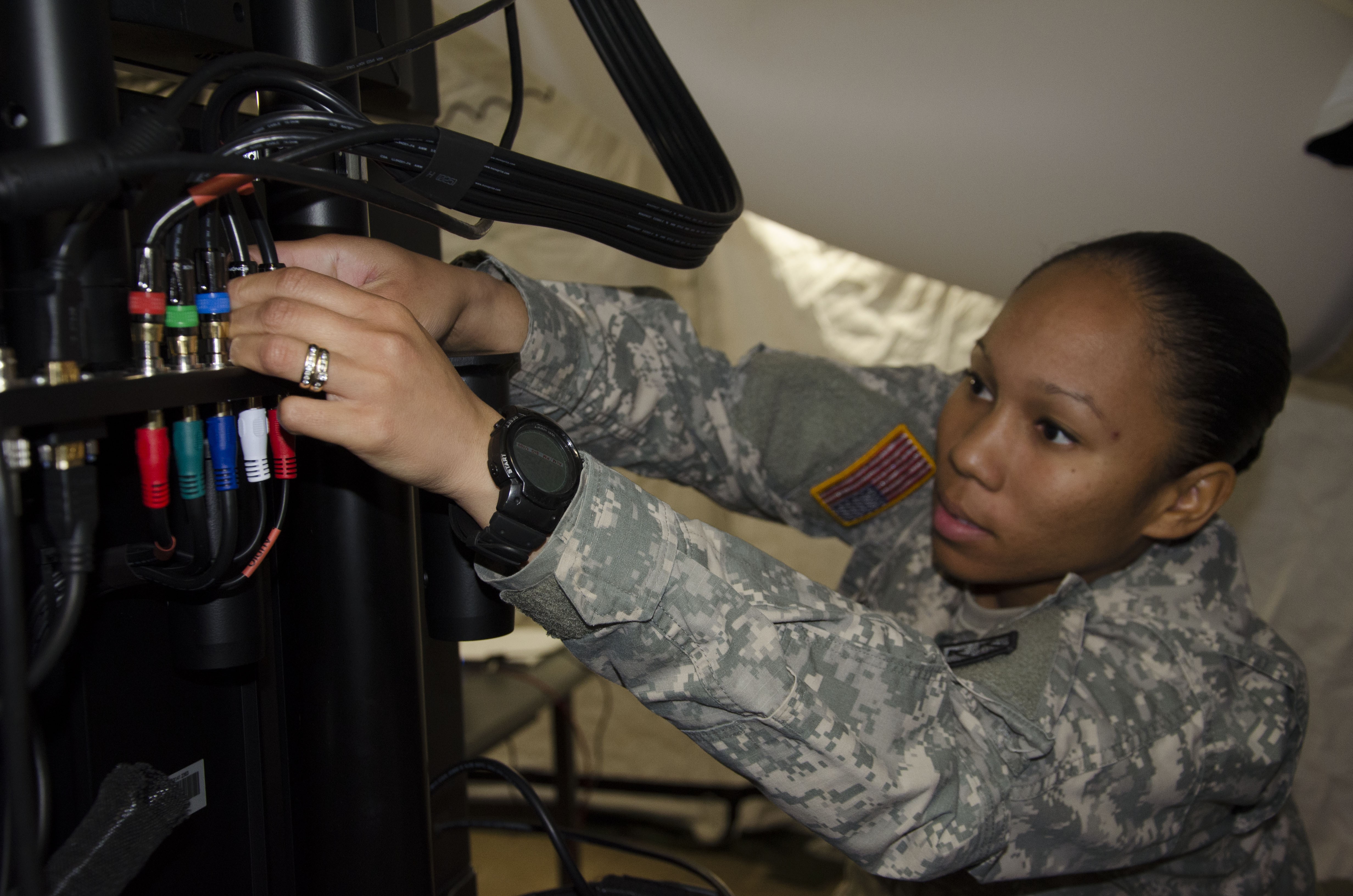
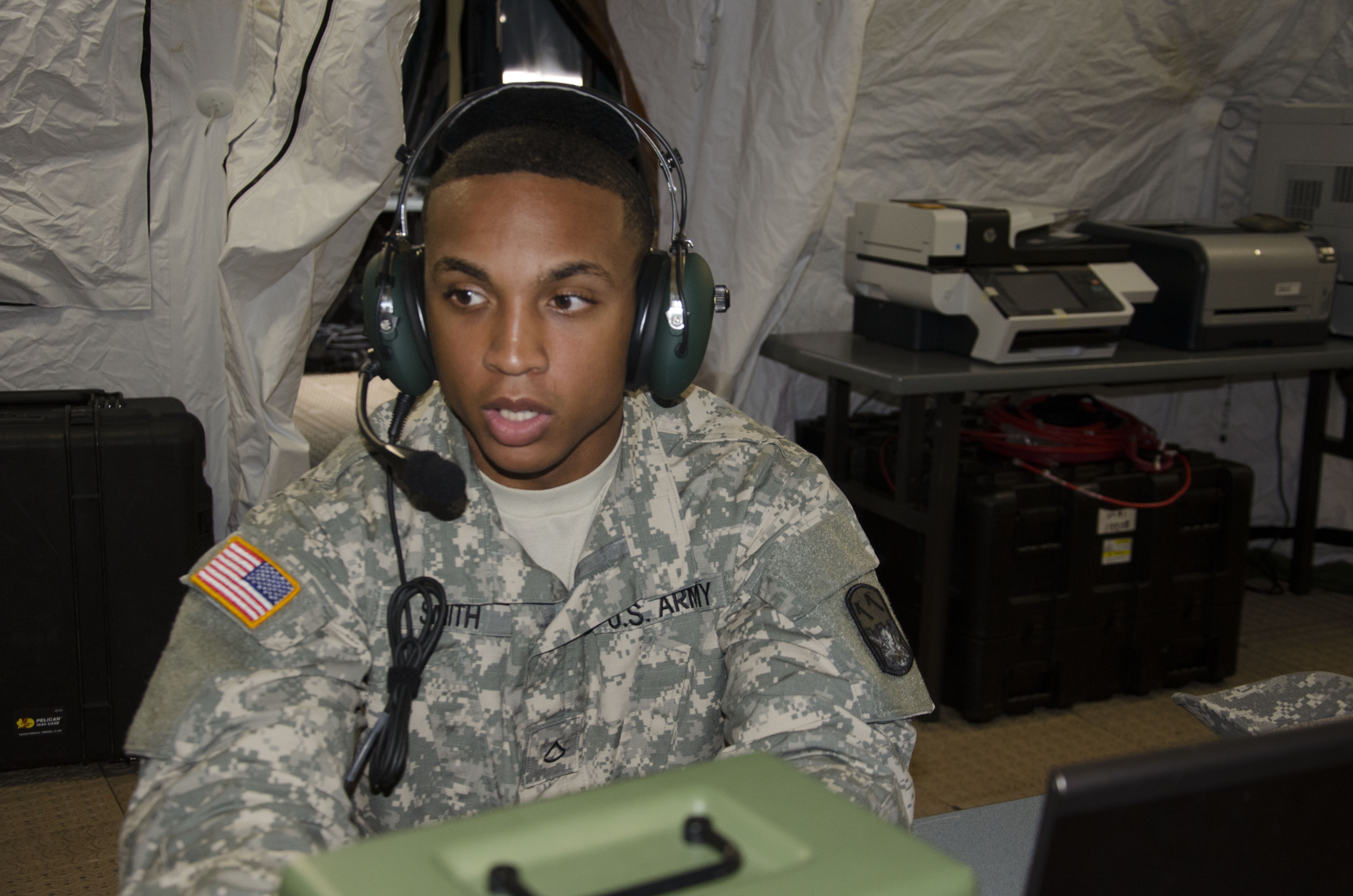
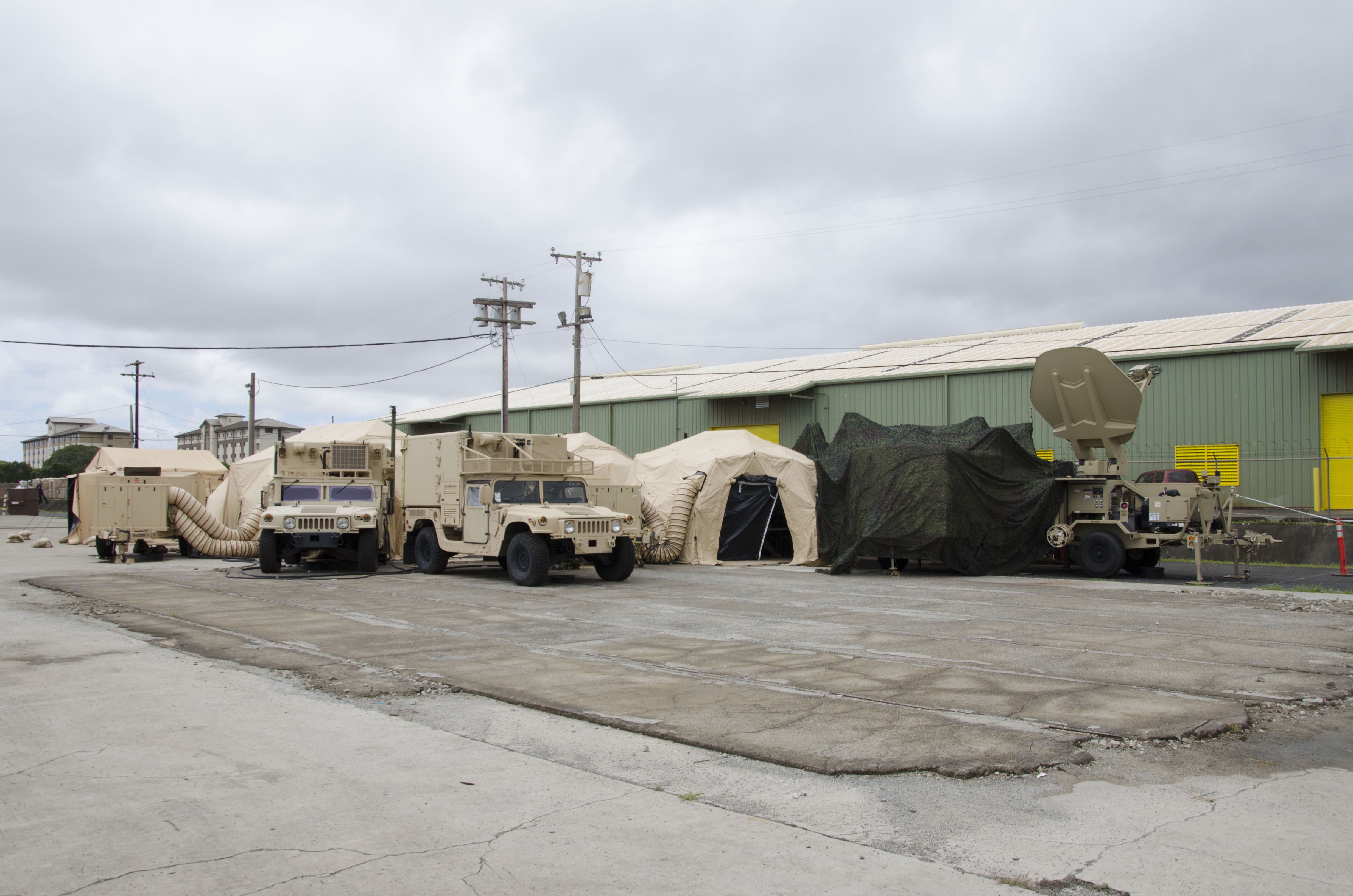
SCHOFIELD BARRACKS -- The 94th Army Air and Missile Defense Command teamed up with the 307th Expeditionary Signal Battalion to surmount a complex training mission in a multi-day exercise, April 28 through May 16, to integrate a new multifaceted missile defense communication system into the military's existing communication satellites, giving the 94th AAMDC Headquarters the capability required to operate from a remote location anywhere in the world.
The Air and Missile Defense Planning and Control System (AMDPCS) is a combination of flexible, modular, Army-common components that are necessary for a deployable air defense tactical command center.
"This is the final phase in fielding this new equipment," said Capt. Lee Humphrey, operations officer in charge of the training site, 94th AAMDC. "This is showing that our Soldiers, who've taken the training or are new to it, are able to set the equipment up correctly and get connectivity in order to give the unit the capability to execute our mission forward."
A critical component of testing the new system, a Joint Node Network (JNN), was used to test the connection of AMDPCS to the military satellite network.
"Our key-take-way from this training was that things with this new system are certainly not text- book. We learned to do some extra-ordinary configuring in order to get the systems 'talking'," said Staff Sgt. Brandon Lee Watson, JNN section sergeant, 307th Expeditionary Signal Battalion. "We have some pretty bright and talented Soldiers with us that were able to figure it out and get the network up and going."
"The JNN connectivity confirmed that the AMDPCS can be placed anywhere in the world and still link into the Pacific Air Picture and communicate over several types of phones and radios using satellites," said Humphrey.
The training site at Schofield Barracks, which is about 20 miles north from Fort Shafter, was chosen because it not only saves the Army about $21, 000 in fuel costs in running generators because it has shore power but also saves man-hours, so the soldiers could focus solely on the challenging training.
"The most challenging aspect for our section was the steep learning curve. No one had any experience in putting a new system like this together," said Chief Warrant Officer Mina Carter, automation officer in charge, 94th AAMDC. "We had to start from scratch. It took a little while to get the system to do what we wanted it to do, but now that we know we have the capability to get it working, next time, we'll be able to put it together much faster."
"This training was the walk phase for using the system for future operations as a forward command post," said Humphrey.
The next step in the training process, according to Humphrey, is verifying that the new system can also be further integrated into other various military defense systems exercises.
Social Sharing