FORT SILL, Okla. (March 20, 2014) -- With large troop cuts and a more stringent rating system in the Army's future, the leadership of the 2nd Battalion, 5th Field Artillery created a program to teach, mentor, develop and retain its first line supervisors.
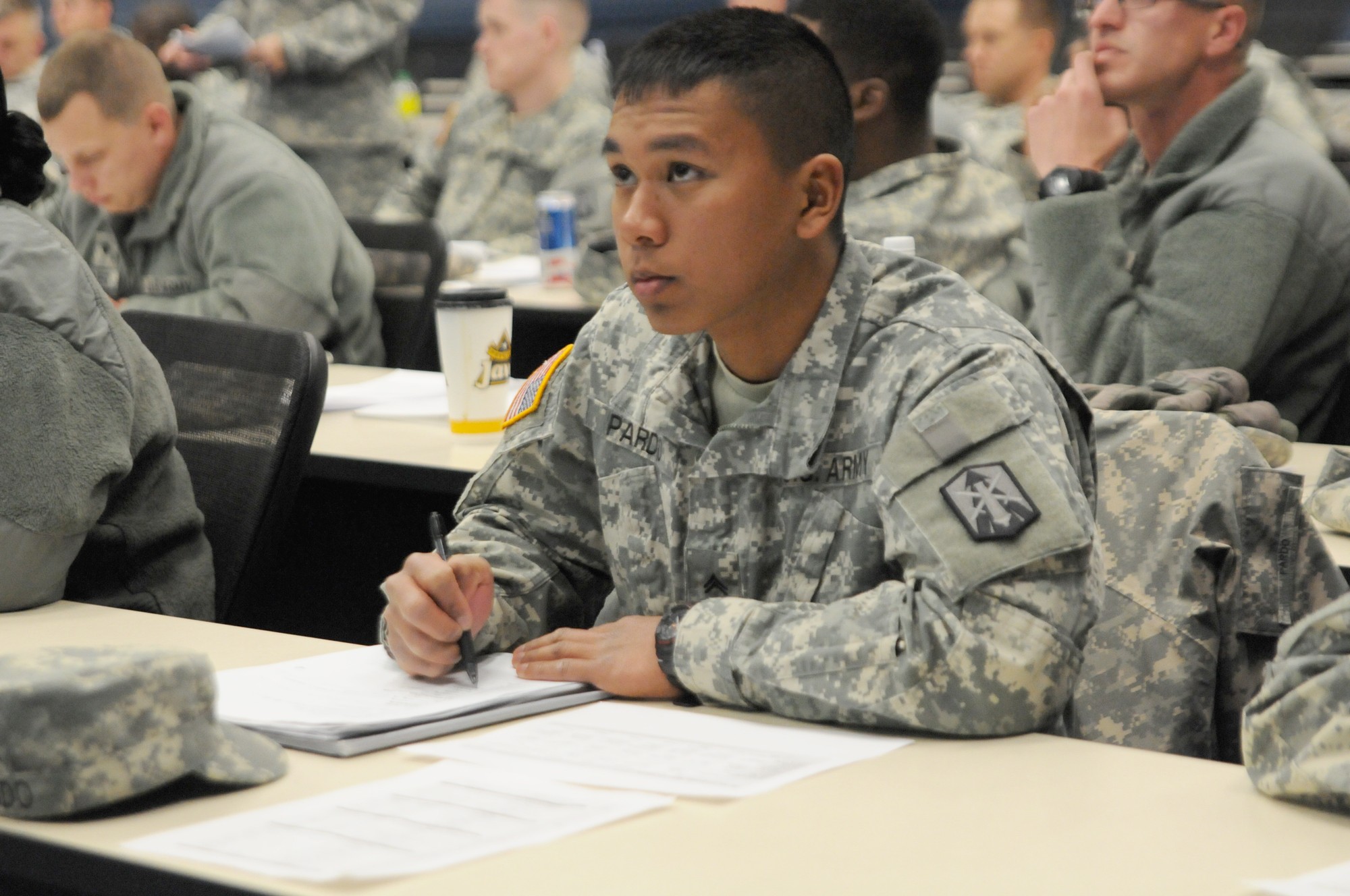
Corporals, sergeants and lieutenants attended the battalion's Junior Leaders Academy, which covered topics that should enhance their leadership capability and potential.
Lt. Col. Travis Gray, 2-5th FA commander, opened the academy and explained the significance of the week's training.
"Leader development is an investment for the future. The time spent and the topics covered in this class will help you be a more effective leader, able to contribute in the Army of today and tomorrow," he said.
An open classroom environment created a forum for active participation, encouraged the student Soldiers to share their opinions and learn from one another's knowledge and experiences.
Many of the junior leaders joined the Army at a time of rapid deployment cycles, personnel increases and seemingly limitless budgets. The learned their basic soldiering skills from leaders who were sometimes rushed through the ranks, but now with draw-downs, leaders must master a broader range of skills to advance and succeed.
"Seeing leadership from so many perspectives really makes me [understand] there are many ways to approach a situation," said Sgt. Derek Gordon, A Battery. "Sharing the experiences of others is making us better leaders now and in the future by giving us tools we can use as early in our careers as possible."
Maj. Paul Lashley, operations officer, and Sgt. Maj. Erick Macher, operations sergeant major, co-taught the classes. Topics included customs and courtesies, Uniform Code of Military Justice procedures, corrective training, critical thinking and leadership styles.
Sergeants received additional, customized classes on accountability of personnel on- and off-duty; leader's books; and "Be, Know, Do."
Officers gained perspective in classes on senior noncommissioned officer counseling, "Taking Command: The First 90 Days," command philosophy and the military decision making process.
First Lt. Garly Larochelle, Headquarters and Headquarters Battery and a Junior Leaders Academy graduate, believed the training gave him extra tools to be a better leader for his Soldiers.
"The training was very beneficial and opened my eyes to new perspectives and enlightened my critical thinking," said Larochelle.
The idea of teaching leadership and attending training is not new in the Army and every leader attends school to improve his or her leadership skills and potential. They do this through the Warrior Leader, Advanced Leader, Basic Officer Leadership or the Captain Career courses. Battalion leaders decided to carry that learning focus a step further, creating the academy for junior leaders. Its intent aimed to create an environment for junior leaders to learn and sharpen their skills for not only their current positions, but also those that await in the future.
"Everything I learned as a junior leader built the foundation for my career," said Command Sgt. Maj. Ronnie Bonham, battalion CSM. "There is no such thing as a born leader, one must learn to be a leader and that takes motivation and hard work to accomplish."
The nation, the Army and Soldiers all deserve and demand great leadership, therefore new ideas and expanded training are required for great leaders to maintain their state of perpetual readiness.
"These are skills I can and need to use for the rest of my life, both in and out of the Army," said Sgt. Kevin Meyer, 609th Forward Support Company, "and more importantly, the long-term effects of my leadership and decisions on my Soldiers can change and improve their lives. This academy is not for us, it's for our Soldiers and their future."
Social Sharing