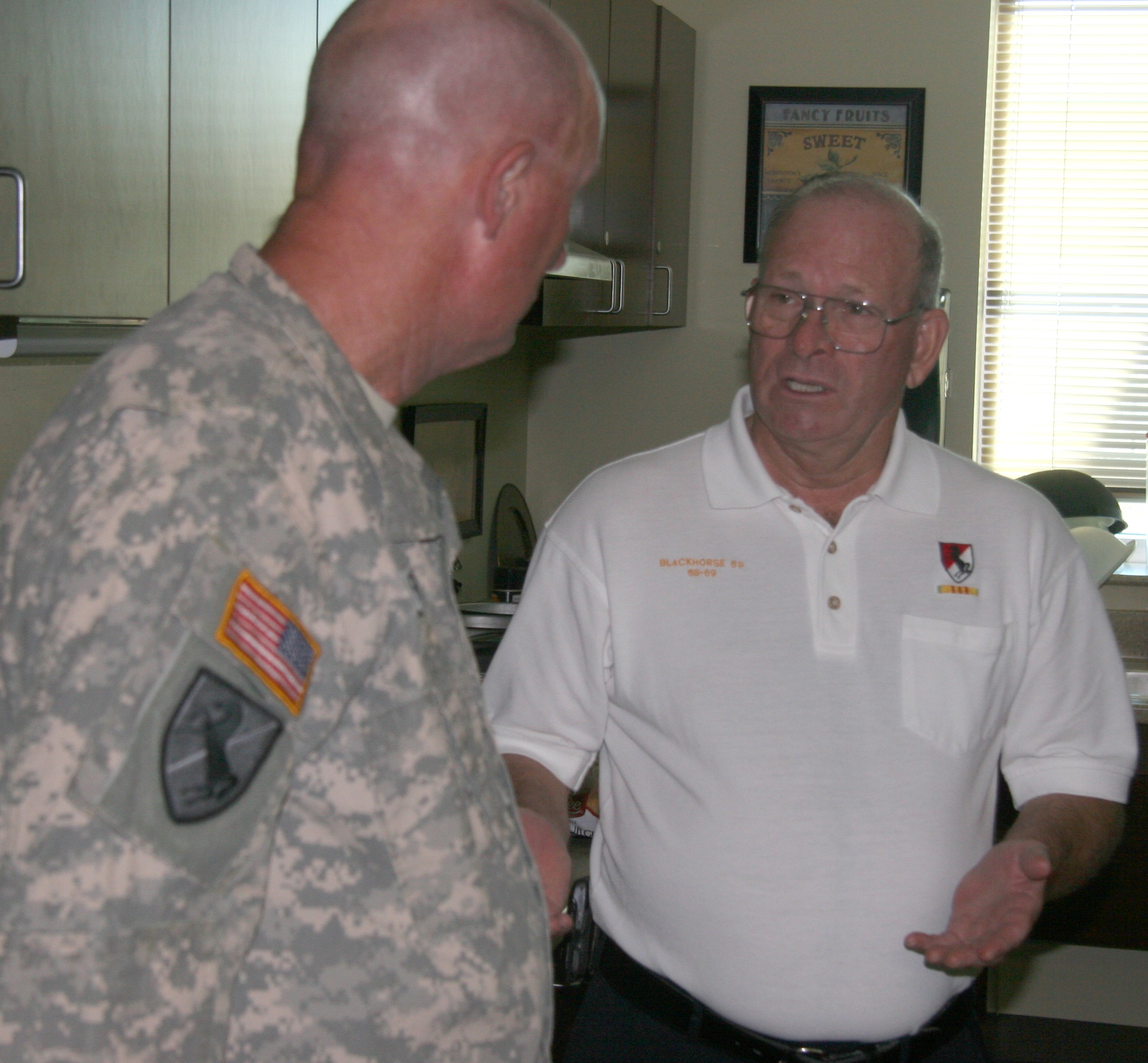
FORT CARSON, Colo. -- It takes a village, even in military circles.
The lean days that would come at the end of the wars were not evident back when Joey Bautista started on his project. It was long before tight budgetary times faced the nation and military community.
Yet his preparation to keep that village going on Fort Carson back then pays off today.
In 2003, when he took over as manager of the Fort Carson Volunteer Corps in Army Community Service, there were only 500 registered volunteers helping out on post. Today he oversees a program with just under 5,000 volunteers providing $2.7 million worth of free labor to the installation annually.
"I am just a recruiter," Bautista said. "The credit goes to the great people in our community who give of their time. They are the ones keeping this program going strong. Plus we have very good managers on post who come to us with their needs."
Bautista sees his job as one where he brings together this energy between the community and managers in order to maximize benefits for both sides. By managing the requirements against the resources in one place, Bautista is able to make sure the volunteer force is trained, ready and able to do what is needed.
An example of this energy is Staff Sgt. Matthew Voshell and his wife of three years, Cassie Voshell. Matthew Voshell is an infantryman with 1st Battalion, 68th Armor Regiment, 3rd Armored Brigade Combat Team, 4th Infantry Division, while his wife is a student studying to become a medical assistant.
They live on post in Family housing. Matthew Voshell's unit has had intense training since he was assigned there two years ago, plus he cared for their infant son to allow his wife time for school.
But now the time is right for his Family.
"I am not here because I have to be," he said. "I want to volunteer. I am not here to earn an award or get points for a (promotion) board. I was an Eagle Scout growing up and am used to giving to the community. My son is going to grow up in my world, and I want to make it a better place for him."
The Soldier said he was interested in volunteering as a designated driver, coach for Little League, Boy Scout assistant or helper at the USO.
For Cassie Voshell it was a little different. She is approaching a point in her undergraduate studies where an internship as a medical assistant is necessary.
Bautista promised to work with her and leaders at Evans Army Community Hospital.
"Why don't you also run for mayor?" Bautista asked. "You'll be the eyes and ears for the commander in the community. It's a good thing to do."
"I will consider it," she said.
"Or you can work with our wounded warrior program," Bautista said.
"I would do that," she responded.
This brings the story to a couple from an older Army generation.
Charley Watkins and his wife, Donna Watkins, volunteer at the Soldier and Family Assistance Center. He served in the Army from private to warrant officer to lieutenant colonel from 1966 to 1989. He was a helicopter pilot and armor officer during his war.
He and his wife know the trauma of the war with the anger and frustration that can build up.
"A lot of times, these young Soldiers have issues," Charley Watkins said. "They will talk to me. Every Soldier deals with combat in a different way. The key is to talk it out."
Charley Watkins usually wears his shirt and hat with his 1968-1969 cavalry combat patch prominent.
One day, several months ago at the center, he noticed an old Soldier wearing a cavalry combat patch from Afghanistan.
"He scoped me out," said Master Sgt. David Minter, Headquarters and Headquarters Company, Warrior Transition Battalion. Minter served four combat tours, but the patch that attracted Charley Watkins was the one from a cavalry unit in 2009-2010.
As the two Soldiers stood in the center's kitchen area earlier this week talking about their wars, they both wiped their watering eyes several times.
"We have a lot of respect for the Vietnam veteran," Minter said. "They didn't get the homecoming they deserved. We got a much better welcome, but a lot of us are angry. When the old guys speak to us, we listen. We know they understand how we feel. It is hard to admit you have a problem.
"War is toxic and talking makes it a little easier to handle the pain."
Social Sharing