FORT BRAGG, N.C. -- After receiving a phone call in the middle of the night Aug. 7, 2011, from her friend and fellow paratrooper, Sgt. Christy Sawyer sprung into action and her suicide prevention training kicked in.
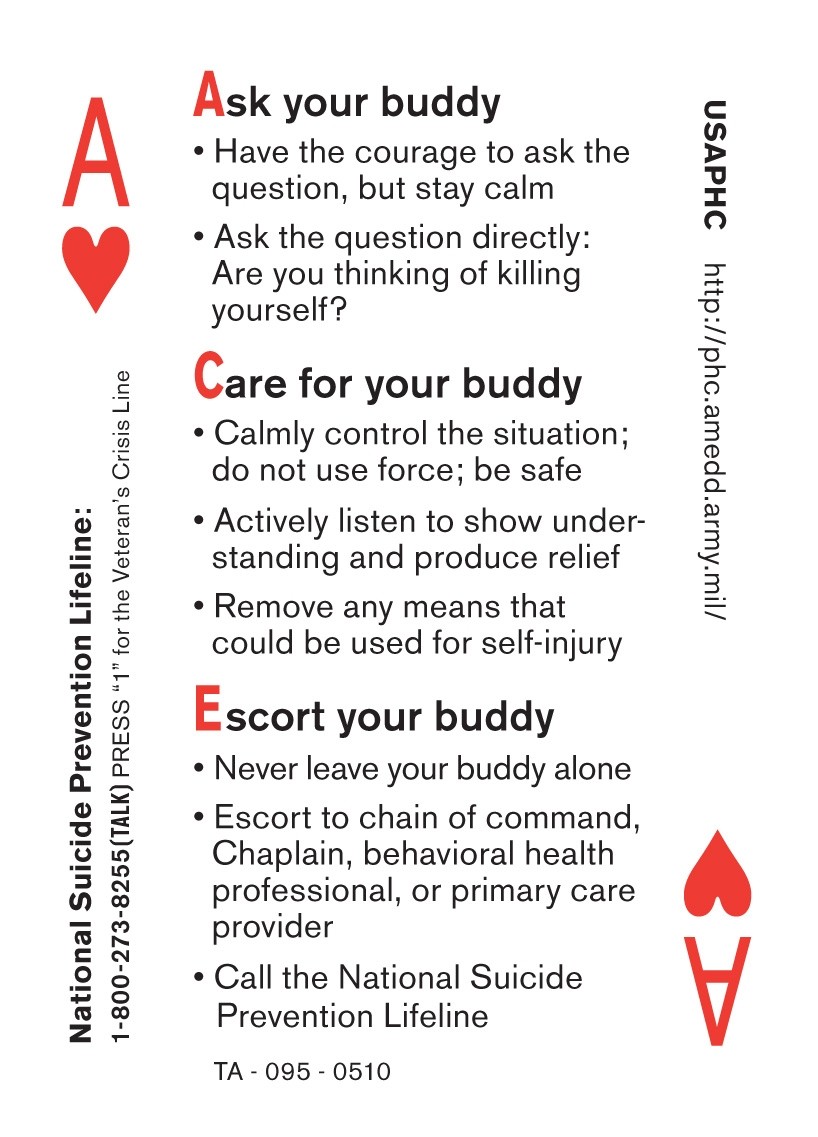
Sawyer, a Company F, 2nd Battalion, 508th Parachute Infantry Regiment, 4th Brigade Combat Team, 82nd Airborne Division medic, knew what she needed to do to help her fellow Soldier. She went straight to Spc. Joshua Brown's (name has been changed to protect his privacy) location and found him in his car, distraught and unreasonable. She took the keys out of the ignition and began to ask him questions.
"I asked him if he really wanted to die and what about me? What was I suppose to do if he went through with this," said Sawyer, a Richmond, Va. native.
Brown, left his home in New Hampshire at 17 to join the Army. Just a few years later, he was struggling with relationship and family problems, had pain from a back injury and issues at work were mounting. Before he realized it, things piled up and he could not think of another way out.
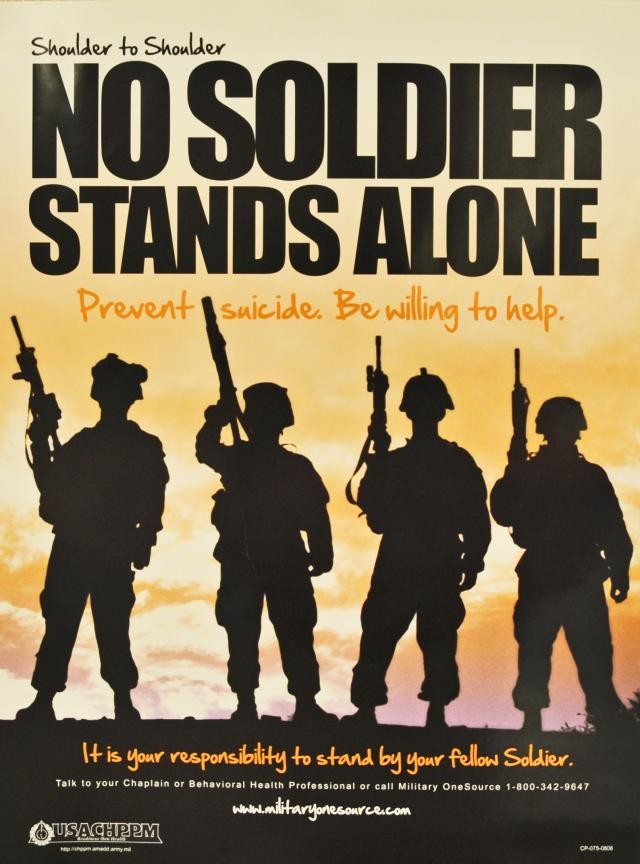
Brown is not alone. The suicide epidemic among active-duty service members and veterans does not stem from one area alone, and there is not one simple fix, pill, or type of treatment to address all the complex issues the men and women that either wear or have worn the uniform now face.
According to the most recent report from the Department of Veterans Affairs, at a rate of 22 each day, veterans are taking their own lives, or one suicide every 65 minutes -- an increase of 20-percent from 2007. Last year more active-duty service members died from suicide than were killed in combat (349 to 295, according to the latest Pentagon figures).
Sawyer, along with the 4th brigade chaplain and Brown's unit were able to get him the help that he needed. Brown attributes being alive today to Sawyer and a good support system.
"Honestly, it was being able to get the support that I needed. My unit tried to make things as normal as they could for me. Also, I realized that there was at least one person who is willing to help and I had great friends. I would not be here without them," said Brown.
Shortly after Brown's suicide attempt, a friend gave him a dog. Brown formed a connection with the dog and, as a self-proclaimed Star Wars nerd, he named her Leia. He has been able to get Leia service-dog qualified and also credits her with his desire to live.
"I now have something to lose," he said.
After seven years in the Army, he was medically discharged from the Army last fall. Today, Brown is adjusting to getting out of the military. He is receiving assistance from Project Warfighter and the Wounded Warrior Project. He looks forward to what the future holds.
"No matter how bad it seems, you never know what tomorrow holds," said Brown.
Now looking back two and a half years later, Sawyer sees that she may have forgot about the one person she is always suppose to take care of -- herself.
Care providers as a profession are susceptible to emotional fatigue and compassion fatigue. The best care providers are those who have the strongest interpersonal alliance with the people they help. It is this helping-alliance which emotionally and mentally drains care providers. The best prevention and sustainment strategy for care providers is to initiate and nurture trusted relationships with other peer providers, said Chaplain (Col.) Mike Strohm, 1st Theater Sustainment Command chaplain.
With six years in service as a medic and two combat tours to Afghanistan, she said she often finds herself thinking about her experiences with suicide. From 2008 to 2009, Sawyer was assigned to the 602nd Area Support Medical Company. During this time, she was given the task to provide hospital support on the airbase. One day she received a call that no one wants to hear -- go pick up a fellow Soldier who had killed himself in a bathroom and transport the body to the morgue. Sawyer was the second person on the scene.
"I had seen a lot of people die in Afghanistan. I was a trauma medic in the CJTF (Craig Joint Theatre Field) Hospital in Kandahar for 10 months. But I had never seen someone do it to themselves," she said. "I thought it was just such a shame, that at that age, you would just give up. I remember being 19, and if you had told me that at 19, I would be in the 82nd Airborne Division, sitting on Fort Bragg as a paratrooper medic who has deployed twice, I would have told you that you are crazy. My life is completely different than it was when I was 19, 21, or 22. I have done things I would never have thought I would ever do … If you don't give yourself that chance, you will never know what your future holds."
Sawyer experiences with suicide have had a profound effect on her.
"It made me a lot more sympathetic towards people who attempt suicide or commit suicide. I understand a lot more now. I really did not have sympathy before," said Sawyer.
Looking back, Sawyer recommends people seek counseling if they've suffered a traumatic experience or have lost fellow soldiers.
"You may feel fine in the moment, but it will catch up with you. It is just now starting to catch up with me. I don't think I ever really dealt with it like I should have. I talked with a few friends, but not the way I should have. Past deployments, a divorce, and one day I wake up and I cannot remember things. During the last month I have realized that I have some issues I need to deal with," she said.
Sawyer has been back from her last deployment for about seven months. She and Brown are still great friends and keep in touch regularly. She leaves for Italy in just a few weeks to begin a new chapter of her life and said she is looking forward to what the future holds.
To learn more about the Army's suicide prevention program and the steps to help those in need, go to http://www.armyg1.army.mil/hr/suicide/default.asp.
Suicide Prevention resources for service members, veterans and their Families:
• National Suicide Prevention Lifeline. 1-800-273-TALK (8255)
• Military One Source. 1-800-342-9647
• U.S. Department of Veterans Affairs, crisis line for mental health treatment and referrals. (800) 273-8255. www.veteranscrisisline.net
Social Sharing