
PAE FIRES
Portfolio Acquisition Executive FIRES
PAE FIRES News
-
 Acting Army Secretary highlights Anniston Army Depot, 'Pit Crew of the American Warfighter'
October 23, 2026
Acting Army Secretary highlights Anniston Army Depot, 'Pit Crew of the American Warfighter'
October 23, 2026
-
 Army leaders visit LSU, reinforcing 'America's Corps of Cadets' initiative
October 23, 2026
Army leaders visit LSU, reinforcing 'America's Corps of Cadets' initiative
October 23, 2026
-
 Acting SecArmy: Army drives the success of the joint force
October 12, 2026
Acting SecArmy: Army drives the success of the joint force
October 12, 2026
-
 Five Defense Companies Selected to Develop Precision Strike Missile Increment 4 Prototypes
September 29, 2026
Five Defense Companies Selected to Develop Precision Strike Missile Increment 4 Prototypes
September 29, 2026
-
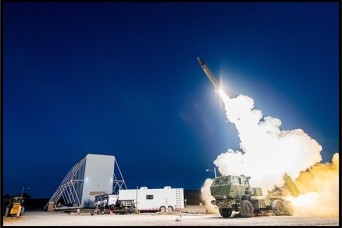 PrSM PROGRAM EXEMPLIFIES RAPID DELIVERY
September 23, 2026
PrSM PROGRAM EXEMPLIFIES RAPID DELIVERY
September 23, 2026
-
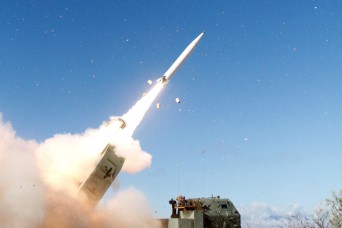 U.S. Army Announces $1.2 Billion Contract for Precision Strike Missile Increment 2 Production
September 21, 2026
U.S. Army Announces $1.2 Billion Contract for Precision Strike Missile Increment 2 Production
September 21, 2026
-
 Army selects systems integration partner for multi-domain launcher
August 31, 2026
Army selects systems integration partner for multi-domain launcher
August 31, 2026
-
 Leadership Through Action: Strengthening the LTAMDS Industrial Base
August 17, 2026
Leadership Through Action: Strengthening the LTAMDS Industrial Base
August 17, 2026
-
 Army Expands Hydra-70 Rocket Supply Chain Through Innovative OTA Agreements
August 5, 2026
Army Expands Hydra-70 Rocket Supply Chain Through Innovative OTA Agreements
August 5, 2026
About PAE Fires
PAE Fires is one of the U.S. Army’s core modernization enterprises, responsible for shaping, integrating, and delivering the Army’s most critical fires capabilities—today and into the future. PAE Fires sits at the intersection of requirements, acquisition, science and technology, operational testing, and Soldier feedback to accelerate the delivery of combat-credible capabilities at speed and scale.
PAE Fires oversees a broad portfolio that spans long-range precision fires, hypersonic weapons, integrated air and missile defense, counter-unmanned aircraft systems, advanced sensors, and the digital command-and-control networks that connect them. From development and prototyping to production, fielding, and sustainment, the enterprise ensures systems are not only technologically advanced, but operationally relevant, interoperable, and ready for combat.
The transition to the Portfolio Acquisition Executive (PAE) construct reflects the Army’s shift toward continuous modernization and faster, more adaptive acquisition pathways. Under this model, PAE Fires emphasizes integration over stovepipes—aligning weapons, sensors, launchers, and networks into coherent, joint- and coalition-ready systems. This approach allows the Army to respond more rapidly to evolving threats while maintaining disciplined stewardship of taxpayer resources.
PAE Fires works closely with Combatant Commands, the Joint Force, industry partners, and international allies to turn innovation into deployable capability. Through competitive prototyping, open systems architectures, and close collaboration with operational units, the enterprise reduces risk, shortens timelines, and delivers capabilities Soldiers can trust in combat.
Headquartered at Redstone Arsenal in Huntsville, Alabama, PAE Fires is powered by a diverse workforce of Soldiers, Army civilians, and industry partners united by a common mission: to ensure the Army retains decisive overmatch across the fires domain—today, tomorrow, and for decades to come.
Ten project offices manage 62 programs of record which leverage state-of-the-art technology to meet full-spectrum operations requirements:
- Advanced Fires Project Office (AFPO)
- Directed Energy - Rapid Prototype Deliver (DE-RPD)
- Integrated Fires Mission Command (IFMC)
- Long-Range Hypersonic Weapon (LRHW)
- Mid-Range Capability (MRC)
- Short and Intermediate Effectors for Layered Defense (SHIELD)
SHIELD Industry Partner Engagement Request - Search, Track, Acquire, Radiate, Eliminate (STARE)
- Self-Propelled Howitzer Systems (SPHS)
- Strategic and Operational Rockets and Missiles (STORM)
- Tactical Aviation and Ground Munitions (TAGM)
Contacts
Portfolio Acquisition Executive - FIRES
- SFAE-MSL
- 5250 Martin Rd
- Redstone Arsenal, AL 35898-8000
- (256) 876-0714
Integrated Fires Mission Command (IFMC)
- IFMC Project Office
- SFAE-MSL-MC
- 5250 Martin Road
- Redstone Arsenal, AL 35898
- (256) 313-8533
Short and Intermediate Effectors for Layer Defense (SHIELD)
- SHIELD Project Office
- SFAE-MSL-SD
- 100 Secured Gateway
- Huntsville, AL 35808
- SHIELD Industry Partner Engagement Request
Search, Track, Acquire, Radiate, Eliminate (STARE)
- STARE Project Office
- SFAE-MSL-SR
- 5250 Martin Road
- Redstone Arsenal, AL 35898
- (256) 876-5018
Strategic and Operational Rockets and Missiles (STORM)
- STORM Project Office
- SFAE-MSL-ST
- 5250 Martin Road
- Redstone Arsenal, AL 35898
- (256) 876-1195
Tactical Aviation and Ground Munitions (TAGM)
- PEO Missiles and Space
- TAGM Project Office
- SFAE-MSL-TA
- 100 Secured Gateway
- Huntsville, AL 35808
- (256) 876-1141