HUMANITARIAN RELIEF
Providing humanitarian relief in the United States and around the world is an essential part of the mission of U.S. Army's active duty, National Guard and Reserve components. When natural disasters strike, U.S. Army Soldiers are there to provide assistance.
U.S. ARMY PRIMARY ROLES & CAPABILITIES
The menu below highlights how the U.S. Army is involved in humanitarian aid responses. Click on each section to read case studies, view examples and learn how various units and military occupation specialties participate in reponse efforts.
HOW IT WORKS
How is a humanitarian emergency declared?
All emergency and major disaster declarations are made solely at the discretion of the president of the United States. Often these are made for events that are severe enough to require federal assistance to alleviate the damage and loss caused by the incident. The Robert T. Stafford Disaster Relief and Emergency Assistance Act, 42 U.S.C. 5121-5207, governs how the United States government provides a coordinated national response to disasters. Under the Stafford Act, the president declares disasters for incidents that require federal assistance to state, local, tribal and territorial governments to alleviate the damage and loss caused by the incident. Incidents eligible for relief include natural catastrophes and fires, floods or explosions — regardless of cause. The Department of Defense can be deployed in supporting the U.S. government's disaster response. In addition to Stafford Act, Public Law 84-99 is another authority under which the U.S. Army can provide support to broader civil works missions and authorities in a flood event. Finally, the U.S. Army can respond to disasters under Defense Support of Civil Authorities which is support provided by federal military forces ordered by the president.
Are there differences between domestic and international responses?
For the U.S. to deliver international aid a host nation must first request support. The U.S. military has provided partner nations support many times. In 2021, U.S. forces supported U.S. foreign disaster assistance in Haiti after a devastating earthquake. There can be differences in laws, authorities, response partners (e.g. agencies, organizations, military commands, governments) involved between domestic and international responses. The roles of civilian agencies and organizations and the relationships of military forces to agencies and organizations can also differ in an international aid situation.
How do Humanitarian Aid Responses benefit the military?
The U.S. Army regularly conducts training and exercises to ensure its people, processes and equipment operate safely and successfully. The Army also conduct after-action reviews at the end of responses. Real-world responses provides the opportunity to further refine operations so that we provide the maximum resources to benefit survivors and help them get back to a sense of normalcy.
The History of USACE Emergency Management
See the full history of the U.S. Army Corps of Engineers Emergency Management in this video, from Theodore Roosevelt's declarations in 1917 urging national flood control and prevention to today's relationship with the Federal Emergency Management Agency and Department of Homeland Security.
RELIEF CATEGORIES
Resources
For Further Exploration
- U.S. Army Corps of Engineers - Emergency Operations
- U.S. Army Reserve - Defense in Support of Civil Authorities
- U.S. Southern Command - Humanitarian Assistance
- U.S. Northern Command - DoD Support to Humanitarian Assistance & Disaster Relief Efforts
- DVIDS - U.S. Army Humanitarian Relief Recent Stories
- Department of Defense - Humanitarian Operations Save Lives, Build Goodwill
- Department of Defense - Helping Hands
Video by the Readiness Support Center, an organization within the U.S. Army Corps of Engineers that enables high performance for contingency responders nationwide and abroad by designing, implementing and continuously improving an educational curriculum responsive to the requirements brought on by natural and man-made disasters and emergencies.
Emergency Operations Management
When major disasters strike U.S. communities, the U.S. Army can be called upon to be involved with the emergency management process. U.S. Army personnel prepare for emergencies or natural disasters by developing detailed warning, control and evacuation plans. Efforts may also include providing technical aid and facilitating the construction of disaster relief warehouses, emergency operation centers and shelters.
VIDEO: Sgt. Arielle Lemoine reflects on her role in supporting the recovery in Southeast Louisiana following Hurricane Ida. As part of the response management team, this video features power generation site and equipment assessment, sewer systems and pump stations. “It makes me proud to be from Louisiana and to know that so many people are stepping up and thanking the corps and showing appreciation and it makes me, yeah, it makes me very proud to be from Louisiana and see such a response, that we are patriotic and so welcoming".
Infrastructure Support
U.S. Army Corps of Engineers, USACE, is part of the federal government’s unified national response to disasters and emergencies. USACE serves as the lead agency for public works, engineering and coordination of long-term infrastructure recovery in support of the Department of Homeland Security and Federal Emergency Management Agency under the National Response Framework. In addition to its role supporting DHS/FEMA, USACE also provides engineering expertise and infrastructure recovery under its own civil works authorities as it did during the response to the collapse of the Francis Scott Key Bridge.
VIDEO: USACE Francis Scott Key Bridge Response. As part of the Unified Command response to the collapse of the Francis Scott Key Bridge, the U.S. Army Corps of Engineers and U.S. Navy Supervisor of Salvage and Diving on June 10 restored the Fort McHenry Federal Channel to its original operational dimensions for commercial maritime transit through the Port of Baltimore. Fully restoring the Federal Channel to its original width and depth involved the removal of about 50,000 tons of #FSKBridge wreckage from the Patapsco River. At its highest point, the Unified Command, consisting of six agencies, led the response efforts among about 56 federal, state and local agencies, represented by 1,587 individual responders.
CASE STUDY: 2024, Francis Scott Key Bridge Response civil works authorities/mission -
USACE activated its emergency operations center on March 26, clearing the way for engineering, construction, contracting and operations specialists to provide support to local, state and federal agencies following the collapse of the Francis Scott Key Bridge. Our key response priorities were to clear the federal channel, to refloat and remove the M/V Dali and to clear remaining wreckage. We were part of the Unified Command response.
At peak efforts, 125 total USACE responders from 15 districts, 2 centers and headquarters elements, provided both onsite and virtual support to the Unified Command's response efforts. During the two-and-a-half-month response, approximately 50,000 tons of bridge wreckage were removed from the Patapsco River to refloat the M/V Dali and to restore the Federal Channel to its original width and depth. Additionally, approximately 500 specialists from around the world operated a fleet of 18 barges, 22 tugboats, 13 floating cranes, 10 excavators and four survey boats to assist with wreckage removal and channel restoration. The M/V Dali was refloated and removed on May 20 and the Federal Channel was restored on June 10 with the full reopening of the Port of Baltimore on June 12. USACE response efforts were accomplished with zero safety incidents and within projected timelines.
See full details at USACE Baltimore | https://www.nab.usace.army.mil/KeyBridgeResponse/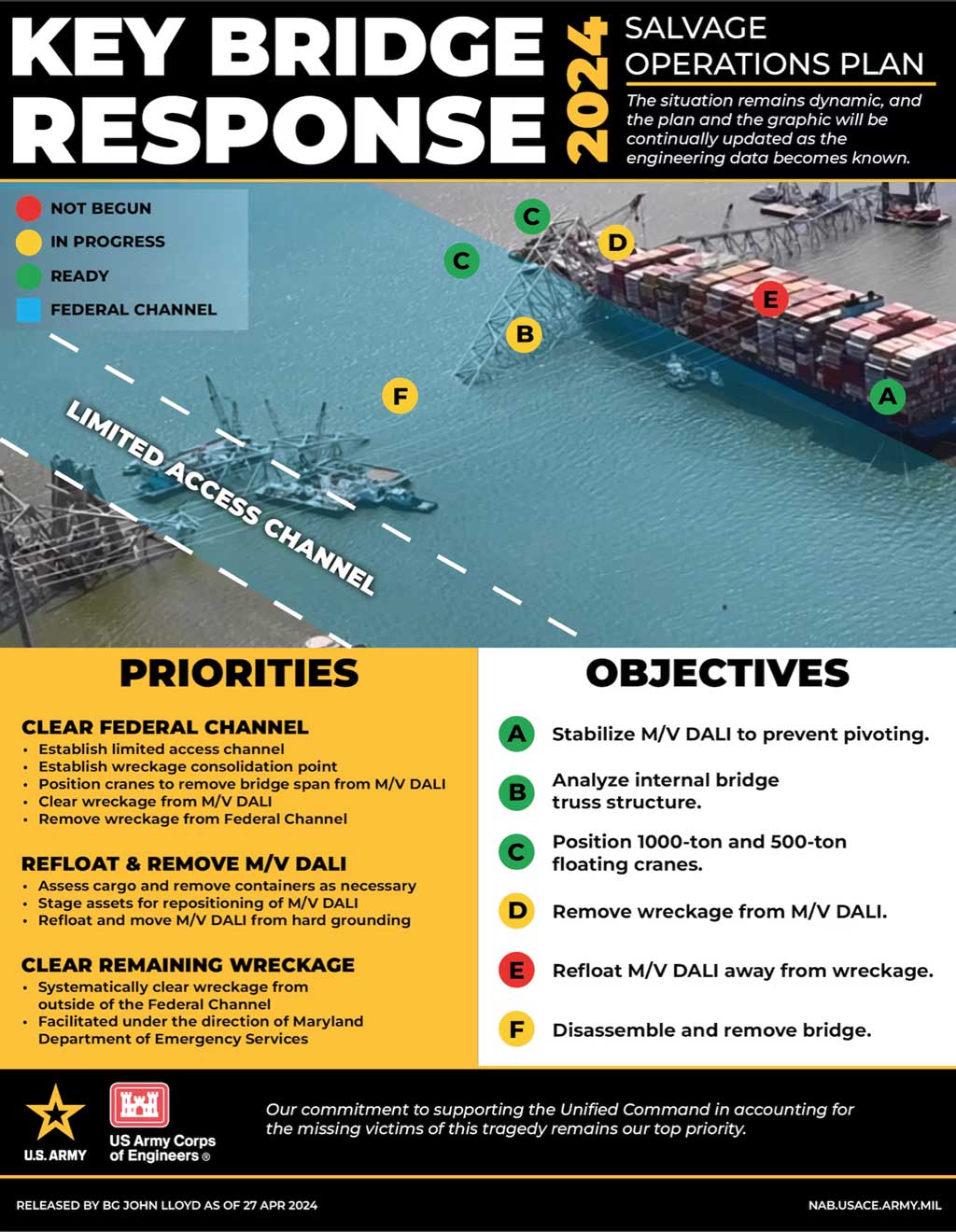
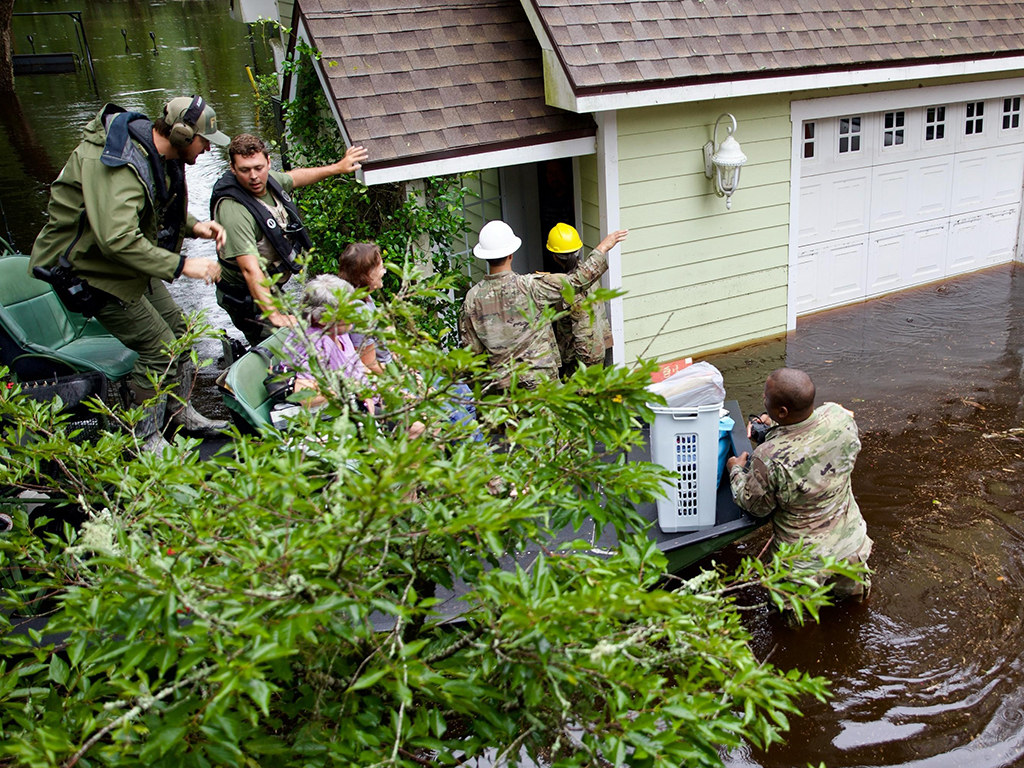
Evacuation, Search and Rescue
Protecting the health and safety of communities when they are in distress or imminent danger, it is the responsibility of search and rescue operations specialists to find and aid them.
VIDEO: "Collaboration, commitment, courage", A flood viction rescue in West Virginia. This is a powerful story of interagency collaboration, commitment and courage during last week's severe flooding. Sharon Hensley, a 75-year-old Clendenin, W.Va. resident, broke her femur during the flooding and was trapped by water on all sides for 18 hours. This is the story of her rescue. Video by Sgt. Mickey Miller
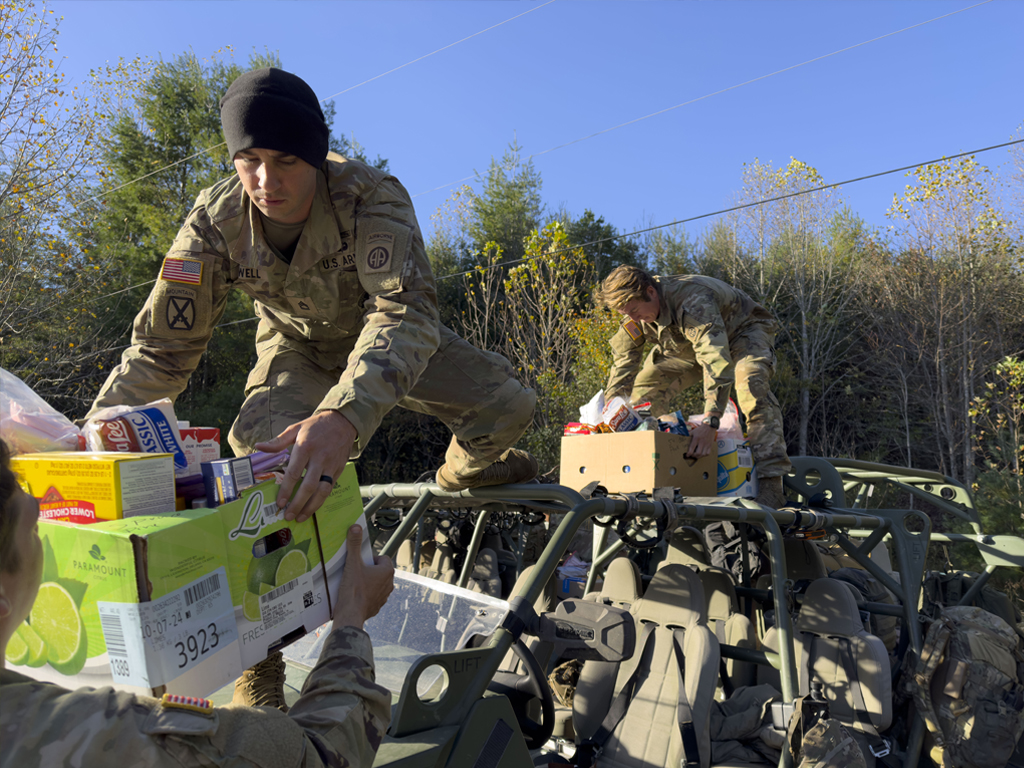
Food & Water Distribution
Transport and distribution of food and water to relieve or reduce endemic conditions such as human suffering, disease, hunger, privation and the adverse effects of conflict, crisis, or disasters both domestically and overseas.
VIDEO: U.S. Air Force Capt. Talon Miner, a flight surgeon assigned to the 435th Contingency Response Group, Ramstein Air Base, Germany, supporting Combined Joint Task Force-Horn of Africa (CJTF-HOA), discusses the role that the DOD is undertaking to combat the spread of Cholera in Mozambique, April 9, 2019. CJTF-HOA is leading DOD Cyclone Idai relief efforts in support of U.S. Agency for International Development's Disaster Assistance Response Team. The task force is helping meet requirements identified by USAID assessment teams and humanitarian organizations working in the region by providing logistics support and manpower to USAID at the request of the Government of the Republic of Mozambique. (U.S. Air Force video by Tech. Sgt. Thomas Grimes)
Emergency Power
Temporary Emergency Power personnel scout and plan the transport and deployment of generators, In addition, critical infrastructure locations are assessed for generator serviceability and to expedite generator installations. Critical infrastructure can include well water and lift stations, detention facilities, bulk fuel distribution centers first responder locations like fire stations.
VIDEO: U.S. Army Corps of Engineers restores power to areas in the Aguadilla region of Puerto Rico after Hurricane Maria. Video by Sgt. David Wilkinson.
Medical Care
Medical teams of doctors, nurses dentists provide general and specialized clinical and public health services. They can provide emergency response support to civic authorities in disaster areas and in times of crisis.
VIDEO: Medical Readiness Training Exercise in Guatemala. The Joint Task Force-Bravo Medical Element participated in a week long Medical Readiness Training Exercise in Huehuetenango, Guatemala, working side by side with the Guatemalan Ministry of Health and Ministry of Defense in support of local government efforts. The joint effort provided basic medical services for 1,500 people.
Temporary Housing
The U.S. Army Corps of Engineers provides a wide range of Temporary Housing/Critical Public Facilities (CPF) assistance in coordination with the Federal Emergency Management Agency to fill the Temporary Housing/CPF needs of the victims of disasters.
The temporary housing mission consists of the placement of temporary housing units at individual home sites, existing mobile home parks or newly designed and constructed mobile home parks when an event has rendered existing homes uninhabitable. Because of the expense of this mission, FEMA uses this mission as a last resort after exhausting all other options such as rental properties.
The U.S. Army Corps of Engineers (USACE) Housing Planning Response Teams (PRT) may also be tasked to provide critical public facilities such as government office space, police stations, fire stations, medical clinics and school classrooms. These units may be modular, interior office space constructed within a large warehouse type building, pre-engineered steel buildings, or large soft sided structures. The processes for accomplishing temporary housing and critical public facilities are very similar. See detailed fact sheet.
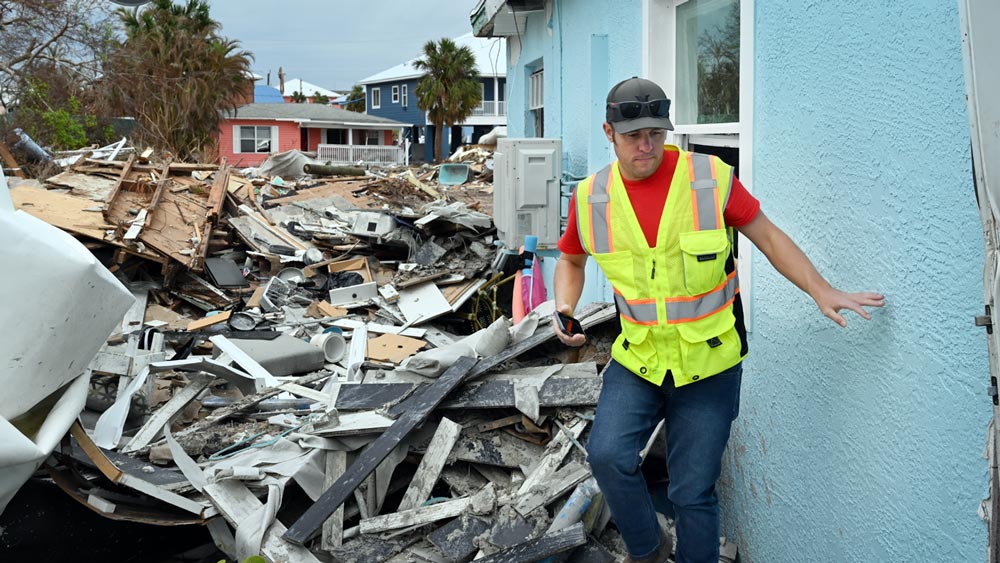 PHOTO: October, 2022. Paul Sadowski, a USACE Hurricane Ian infrastructure team member and Mobile District employee, conducts an Applied Technology Council - 45, or ATC-45, Rapid Evaluation Safety Assessment on Fort Myers Beach, Florida, USACE received a FEMA mission assignment to conduct the ATC-45 assessments and USACE inspectors are working in coordination with county and state of Florida officials to conduct the structure assessments and then forwarding their findings to local county officials for a final decision. ATC-45 is an industry standard safety evaluation after windstorms and floods. In addition to the ATC-45 assessments, USACE is actively supporting FEMA and the state of Florida Hurricane Ian recovery efforts in other areas to include temporary blue roof installations, temporary housing and debris technical assistance.
Safety & Security Assistance
Defense Support of Civil Authorities (DSCA) is the process by which United States military assets and personnel can be used to assist in missions normally carried out by civil authorities. The U.S. Army can advise and assist authorities during emergencies to save lives, preventing human suffering by providing safety and security and mitigating great property damage./p>
VIDEO: Hawaii National Guardsmen Assist with Patrols and Security During Big Island Lava Flow. Hawaii Army and Air National Guardsmen were called to support Hawaii County Civil Defense authorities reacting to the Puna lava flow. They patrolled neighborhoods and blocked roads from curious onlookers from the lava flow advancing towards homes. Nov. 3, 2014.